
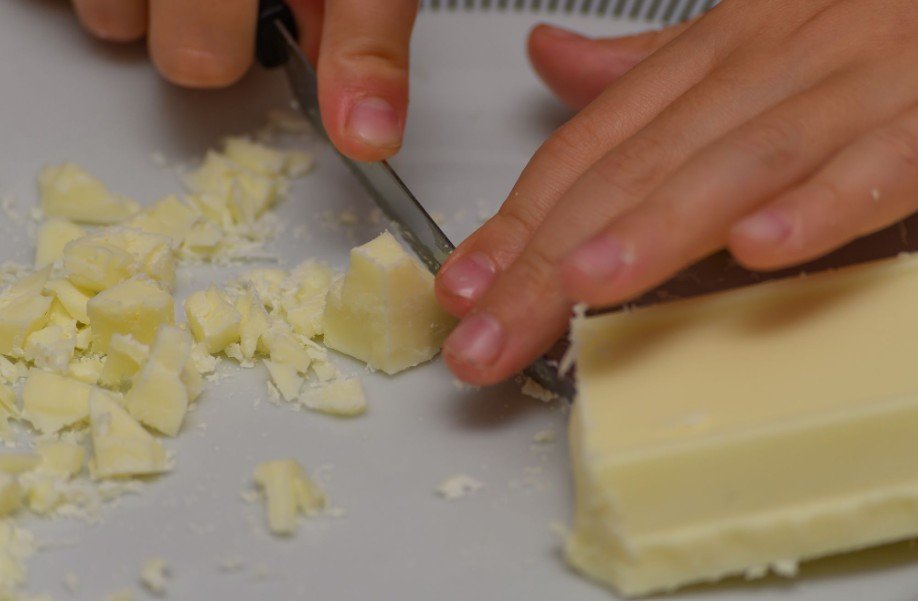
Few things are more disappointing than pulling homemade biscuits from the oven and finding them flat, dense, or missing those beautiful pull-apart layers. I have found that one small technique can change the texture dramatically: how to grate cold butter for flaky biscuits. Instead of cutting butter into uneven chunks and working it into the flour by hand, grating creates thin, cold pieces that spread quickly through the dough.
That matters because the butter needs to stay solid until it reaches the oven. As those cold shreds melt, their water content turns to steam and helps separate the dough into tender layers. With a box grater, a chilled stick of butter, and a little attention to temperature, you can make the biscuit-making process faster, cleaner, and much more consistent.
Why Does Grated Cold Butter Make Biscuits Flaky?
Butter contains both fat and water. When cold pieces of butter enter a hot oven, the water turns into steam. That steam expands inside the dough, creating tiny pockets that help push apart the layers.
The fat also coats some of the flour, which limits gluten development and keeps the biscuit tender.
Grating works especially well because it creates thin, fairly even butter pieces. Compared with cutting butter into irregular cubes, grated butter distributes throughout the flour faster and requires less handling.
The less I handle the dough, the less likely I am to warm the butter or develop too much gluten.
Should You Freeze Butter Before Grating It for Biscuits?
Very cold butter is essential, but it does not always need to be frozen solid.
A practical method is to place a refrigerated stick of butter in the freezer for about 20 to 30 minutes before baking. You want it extremely firm but still easy enough to run across a box grater.
Straight-from-the-refrigerator butter can work in a cool kitchen, but it softens quickly from the friction of grating and the warmth of your hand. Briefly freezing it gives you extra time before the butter becomes greasy or starts smearing.
Unlike a precision diffraction grating, where evenly spaced grooves are essential, a kitchen grater only needs to create small, separate butter shreds that stay cold enough to hold their shape. Completely frozen butter can sometimes be difficult to grate, so I prefer checking it before it becomes rock hard.
How Do You Coat Butter With Flour Before Grating?
This small step makes the process much easier.
I first combine the flour, baking powder, salt, and any sugar called for in the biscuit recipe. Then I unwrap most of the cold butter while leaving a small section of the paper wrapper around one end.
The wrapper acts like a handle and keeps my fingers from directly warming the butter.
Before grating, I lightly dip the exposed portion of the butter stick into the dry flour mixture. The thin coating reduces sticking and helps the butter slide across the grater.
As I grate, I dip the butter back into the flour every few strokes. This keeps the surface dry and helps prevent the butter shreds from sticking together.
Which Side of a Box Grater Is Best for Cold Butter?
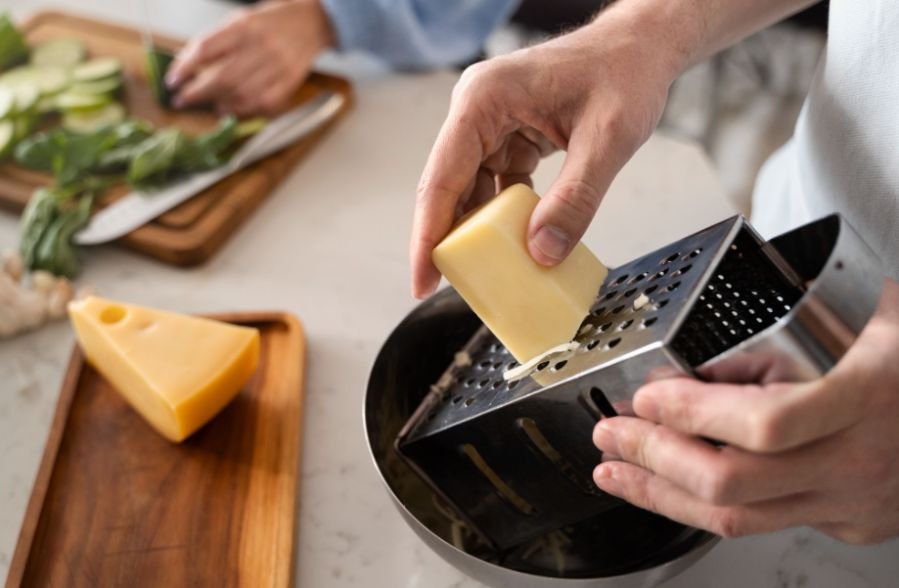
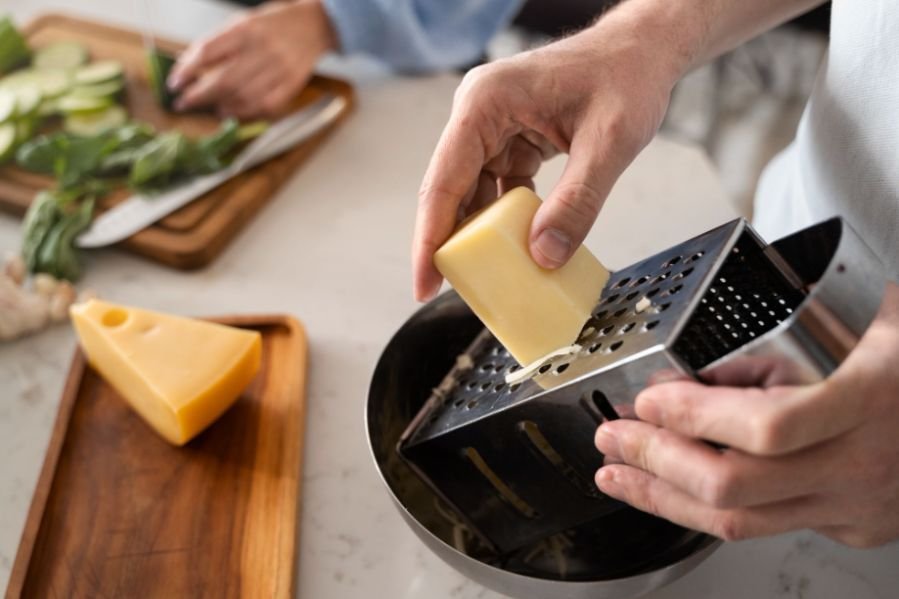
Use the large-hole shredding side of a standard box grater, the same side you would normally use for cheddar cheese.
Those holes produce butter shreds that are thin enough to mix evenly but large enough to remain distinct inside the dough.
Very fine grater holes are less useful because the butter can become too small and warm quickly. Once butter begins blending completely into the flour, you lose some of the separate pockets needed for visible flaky layers.
Some bakers use the slicing side of a box grater to produce thin butter sheets, but the large holes are easier and more reliable for everyday homemade biscuits.
How to Grate Butter Directly Into Biscuit Flour
For the most efficient method, I place the box grater directly over or inside the bowl of dry ingredients.
I run the firm butter downward over the large holes using quick, controlled strokes. Every few passes, I coat the remaining butter lightly with flour again.
As the stick gets smaller, I slow down. Once only a small nub remains, I stop rather than risk scraping my fingertips against the grater. I simply chop that final piece into small, pea-sized bits and add them to the bowl.
This method keeps nearly all the butter cold and reduces unnecessary handling.
How Should You Mix Grated Butter Into Flour?
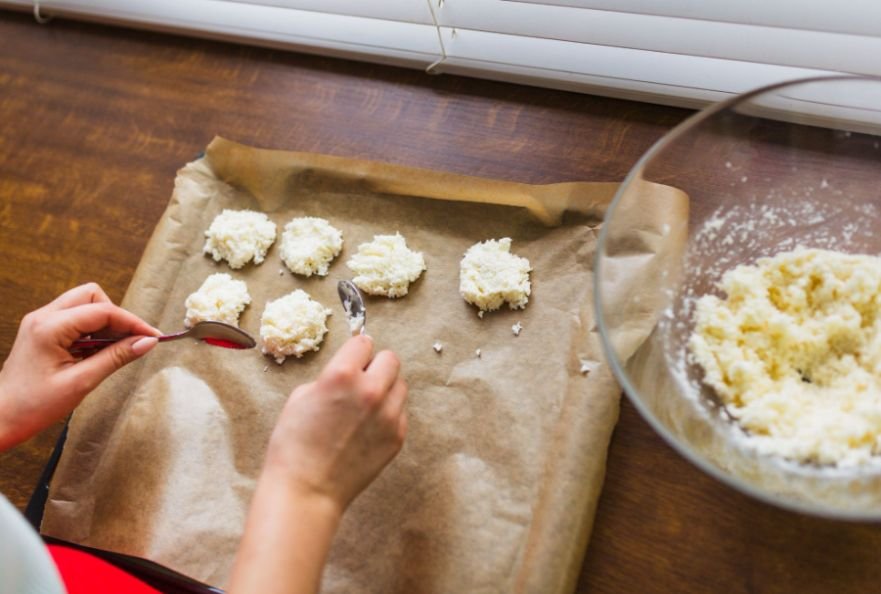
Once the butter is grated, I use a fork to gently toss the shreds through the dry ingredients.
The goal is not to mash or blend the butter into the flour. I want each piece lightly coated and distributed throughout the bowl.
Using a fork instead of my hands also reduces heat transfer. If I do use my fingertips, I work very quickly.
Keeping ingredients cold and handling them carefully can make kitchen prep easier in other recipes, too. When a dish calls for several cloves, try this quick two-metal-bowl garlic-peeling method to remove papery skins from a whole head in about 15 to 20 seconds.
When the butter begins looking shiny, sticky, or soft, that is a sign it is warming up.
What Should You Do If the Grated Butter Gets Too Warm?
A warm American kitchen, especially during summer, can soften butter surprisingly fast.
If the butter shreds or flour mixture feels soft, I put the entire bowl in the freezer for about 10 minutes before adding cold buttermilk.
This short chilling step can make a major difference.
Cold buttermilk also helps keep the mixture cool, so I leave it refrigerated until the moment I need it.
Proper storage also helps keep other dairy products fresh for longer. Learn how to make cheese last longer without mold with practical tips for wrapping, refrigerating, and preserving different types of cheese.
Does Folding Biscuit Dough Create More Flaky Layers?
Yes. Grated butter works even better when combined with gentle folding.
After adding the liquid, I mix only until a shaggy dough forms. Then I pat the dough into a rectangle and fold it over itself a few times.
Each fold stacks layers of dough with pieces of butter between them. When the biscuits bake, steam from those butter pieces helps separate the layers.
The key is restraint. Too much kneading or folding can develop excess gluten and produce tough biscuits.
What Mistakes Prevent Biscuits From Becoming Flaky?
Warm butter is one of the biggest problems. If the butter melts into the flour before the biscuits reach the oven, it cannot create the same steam pockets.
Overmixing is another common issue. Biscuit dough does not need to look smooth. A slightly rough, shaggy texture is completely normal.
When cutting biscuits, press the cutter straight down instead of twisting it. Twisting can compress the edges and make it harder for the layers to rise cleanly.
You should also use fresh baking powder. Cold butter can improve texture, but old leavening can still leave biscuits flat.
Cold Butter vs. Frozen Butter: Which Is Better for Biscuits?
Both can work.
Refrigerator-cold butter is easier to grate and is usually sufficient in a cool kitchen. Briefly frozen butter stays firm longer and is particularly helpful when your kitchen is warm.
For me, the sweet spot is butter that has been chilled in the freezer for roughly 20 to 30 minutes. It should feel very firm without becoming so hard that grating turns difficult.
Frequently Asked Questions
1. Can I grate cold butter directly into flour?
Yes. Grating directly into the dry ingredients minimizes handling and makes it easy to coat the butter shreds with flour immediately.
2. How long should butter stay in the freezer before grating?
About 20 to 30 minutes usually works well for refrigerated butter, although freezer temperatures vary. The butter should be firm rather than completely rock solid.
3. Why should I dip butter in flour while grating it?
A light flour coating reduces sticking, gives you better control, and helps prevent the shreds from clumping on the grater.
4. Can I use salted butter for biscuits?
Yes. If you use salted butter, consider slightly reducing the added salt in the recipe so the finished biscuits do not taste overly salty.
5. Can I grate butter ahead of time?
Yes. Grate the butter onto parchment or into a bowl and keep it refrigerated or frozen until you are ready to mix the dough.
6. What is the easiest way to learn how to grate cold butter for flaky biscuits?
Start with very firm butter, use the large-hole side of a box grater, coat the butter lightly with flour, work quickly, and rechill the mixture whenever it starts to soften.
Final Thoughts
Once I started using grated butter, homemade biscuits became much easier to control. The butter distributes more evenly, I spend less time cutting fat into flour, and the dough stays lighter because I handle it less.
Simple kitchen techniques can make everyday cooking easier, from preparing biscuit dough to preserving fresh ingredients. For another practical prep tip, learn how to freeze fresh herbs in olive oil trays so you can keep herbs ready for future meals.
The most important lesson is that grating alone is not enough. Keep the butter cold, dip it in flour to prevent sticking, use the large side of the grater, toss the shreds gently, and chill the mixture again when necessary. When I follow those steps and understand how to grate cold butter for flaky biscuits, I get a much better chance of producing tall, tender biscuits with visible, pull-apart layers.