
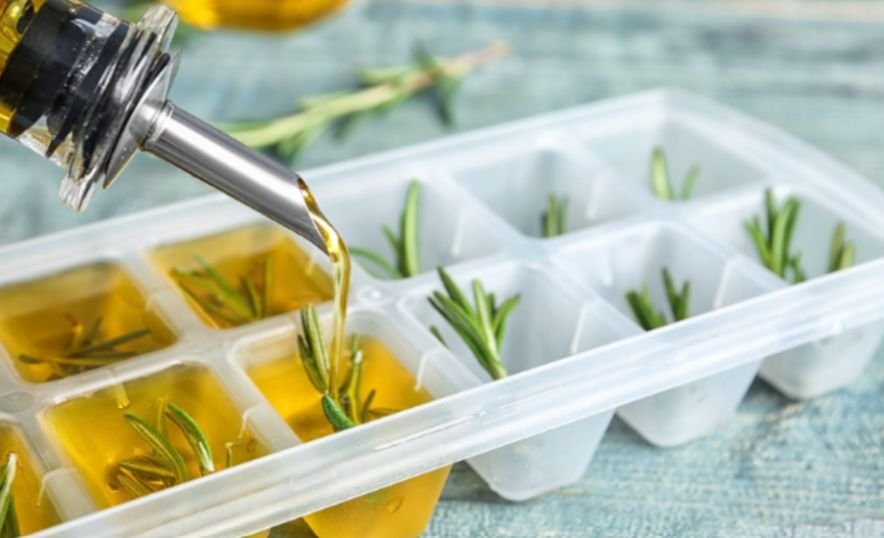
A half-used bunch of parsley shouldn’t become another forgotten ingredient in the refrigerator. I like kitchen habits that make leftovers useful, and freezing herbs in small cooking portions fits that approach perfectly.
Learning how to freeze fresh herbs in olive oil trays gives you a convenient way to preserve extra basil, rosemary, thyme, and other favorites. Wash and dry the herbs, chop them, portion them into a tray, add olive oil, and freeze promptly. Once firm, transfer the cubes to a labeled freezer container.
The result won’t replace crisp leaves sprinkled over a salad, but it can bring herb flavor to pasta, soups, vegetables, and weeknight dinners.
Which Fresh Herbs Can You Freeze in Olive Oil?
Rosemary, thyme, sage, and oregano work well because their flavors suit cooked dishes. Remove tough stems before chopping, especially from mature rosemary and thyme.
Tender herbs, including basil, parsley, cilantro, dill, and chives, also work. Their leaves soften after freezing, so plan to use them in sauces, soups, or other preparations where texture matters less.
Choose the oil according to the finished dish. Olive oil suits savory cooking, but water may be more practical for mint intended for drinks or herbs going into an oil-free broth.
Freezing preserves useful flavor; it doesn’t restore declining herbs. Discard slimy, moldy, or spoiled leaves before starting.
What Supplies Do You Need?
Gather fresh herbs, olive oil, a clean knife, a cutting board, measuring spoons, and a freezer-safe ice cube tray. You’ll also need an airtight freezer container or freezer bag.
A flexible silicone tray makes removing the portions easier. A lid helps protect the mixture during freezing, although a clean cover also works.
Regular olive oil and extra virgin olive oil are both suitable. Choose an oil whose flavor you enjoy. You don’t need an expensive finishing oil for cubes destined for soup or sautéed vegetables.
How Do You Make Frozen Herb Oil Cubes?
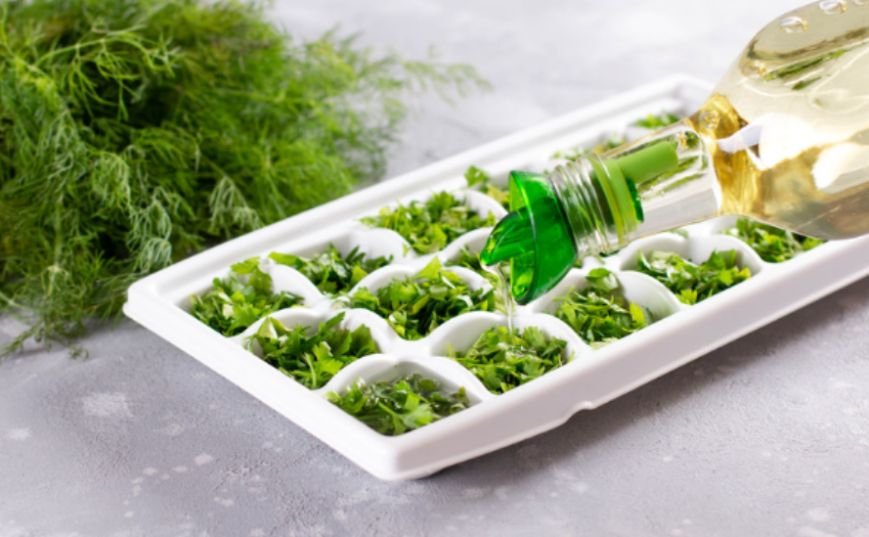
1. Wash and Thoroughly Dry the Herbs
Rinse herbs under cool running water, removing damaged leaves and visible dirt. Drain them, then gently pat them dry with a clean towel. A salad spinner helps with larger batches.
Remove surface moisture before adding oil. Excess water introduces ice and can increase splattering during cooking. Drying does not make homemade herb oil safe for pantry storage.
2. Remove Tough Stems and Chop
Strip leaves from woody stems. Finely chop rosemary and sage so you won’t encounter tough pieces later.
Chop tender herbs to the size you normally use when cooking. For large harvests, briefly pulse the leaves with some oil in a food processor. Stop before creating a smooth purée unless that texture suits your recipes.
3. Measure the Herbs Into the Tray
Knowing how to freeze fresh herbs in olive oil trays becomes more useful when every portion contains a predictable amount.
Start with about 1 tablespoon of chopped herbs per compartment, provided your tray has enough room for oil. Use smaller quantities in small wells. Keep the amount consistent and record it on the storage label.
4. Add Oil and Cover the Herbs
Pour in enough olive oil to surround the chopped leaves. Gently press floating pieces beneath the surface and avoid overfilling.
Measure the oil if you want to account for it in future recipes. A cube containing 2 teaspoons of oil contributes that amount toward the dish’s total cooking fat.
Alternatively, mix 2 cups of chopped herbs with ⅓ cup of oil before portioning. This creates a concentrated mixture rather than oil-heavy cubes.
5. Freeze Promptly and Transfer
Cover the tray and place it level in the freezer immediately. Allow several hours, preferably overnight, until the portions are firm enough to remove.
Pop them into an airtight freezer bag or container. Remove excess air and label with the herb, preparation date, and measured quantity per cube.
How Long Do Frozen Herb Cubes Last?
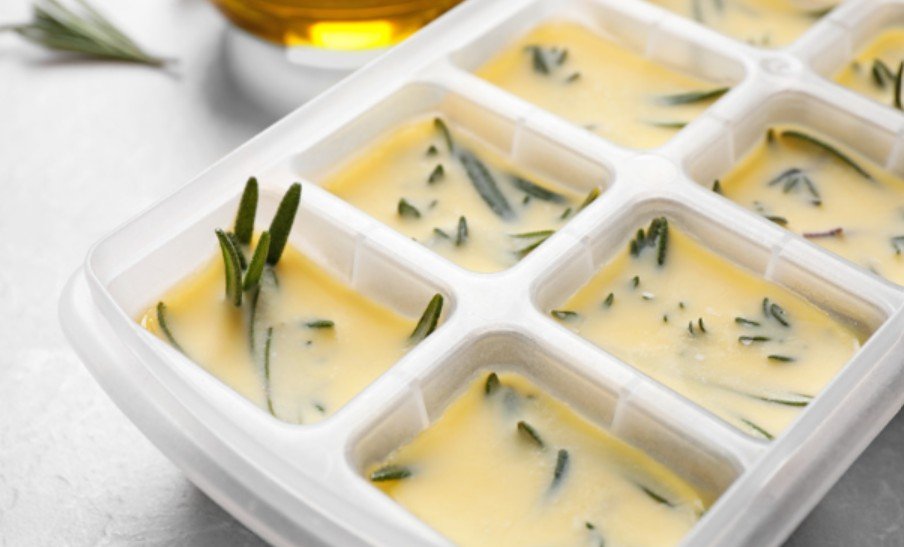
Aim to use frozen herb cubes within three to six months for good flavor. Keep them continuously frozen, ideally at 0°F, and protect them from air exposure.
Olive oil can become cloudy and remain softer than water-based ice. A slightly yielding cube doesn’t automatically mean the batch failed.
Homemade herbs in oil require cold storage. Never leave the mixture at room temperature or treat it as shelf-stable infused oil. Freezing doesn’t sterilize herbs or rescue ingredients that were stored improperly.
How Do You Cook With Frozen Herb Cubes?
Add a cube directly to simmering soup, stew, or pasta sauce. For sautéing, start it in a cool or gently warming skillet and let the oil melt before increasing the heat. Avoid dropping moisture-containing cubes into smoking-hot oil.
To make these cooking portions even more practical, consider freezing tomato paste in tablespoon portions so you can combine a measured amount of tomato paste with frozen herb oil cubes when preparing soups, sauces, and quick weeknight meals.
Try rosemary with roasted potatoes, basil with tomato sauce, or dill with a cooked lemon sauce. Combine thyme and sage for poultry dishes, or parsley and oregano for vegetables.
When preparing fresh accompaniments for these meals, use these tips on how to ripen avocados in 10 minutes for guacamole to plan a quick, creamy side that pairs well with soups, roasted vegetables, or other weeknight dishes.
Tender herbs often taste brighter when added closer to the end of cooking. Remember to reduce other oil in the recipe when appropriate.
Frequently Asked Questions
1. Can I learn how to freeze fresh herbs in olive oil trays without blanching?
Yes. Many herbs can be washed, dried, chopped, and frozen directly in oil. Blanching is optional for some preparations, but it adds work and may change delicate flavors.
2. Should I Mix Different Herbs Together?
You can, but freeze individual herbs first if you want flexibility. For blends, choose combinations you regularly cook with and label every ingredient.
3. Can Frozen Herb Cubes Replace Fresh Garnishes?
Usually, they work better as cooking ingredients. Freezing softens leaves, so thawed herbs won’t provide the crisp appearance of freshly chopped garnishes.
Make Your Next Bunch Last Longer
I’d start with one herb and a small tray, measuring each portion so dinner preparation stays simple. Once you know which cubes you reach for most, you can preserve larger batches and try combinations that suit your favorite meals.
You can also make other leftover ingredients go further with these genius ways to use stale bread before it molds, helping reduce food waste and get more value from everyday kitchen staples.
Keep your portions consistent, freeze them promptly, and store them in an airtight container. With a little preparation, that half-used bunch becomes a useful ingredient for future dinners instead of something forgotten in the refrigerator.