
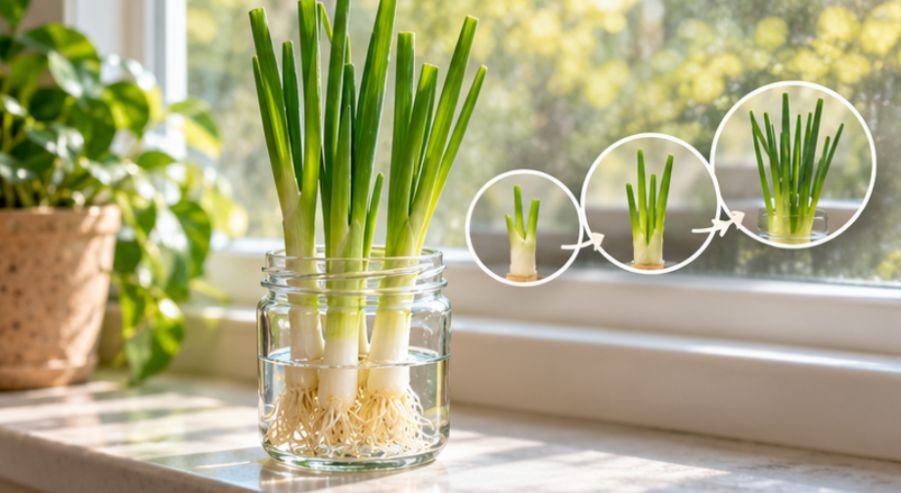
A green onion that looks finished after dinner still has enough living tissue at its root end to produce another round of fresh greens. Instead of tossing those white ends, you can have visible new growth on your kitchen windowsill within days.
Learning how to regrow green onions in water on windowsill is one of the easiest kitchen-scrap gardening projects because there is no seed starting, special equipment, or potting mix involved. You need intact roots, a small container, clean water, and decent natural light.
There is one important catch, though: a glass of plain water is ideal for quick regrowth, not endless production.
Why Green Onion Scraps Grow Again
The white end of a green onion is more than kitchen waste. If the basal portion and roots remain intact, the plant still contains living growing tissue capable of producing new leaves.
University of Illinois Extension specifically recommends saving the rooted white portion, placing it in shallow water, and setting it in a sunny window. New green growth then emerges from the top.
Green onions, scallions, and bunching onions are closely related terms used somewhat differently depending on the variety. The University of Minnesota Extension notes that scallions, often called green onions, are valued for their tender green and white stalks and generally do not develop the large bulbs associated with mature storage onions.
That growth habit is part of what makes the rooted bases so convenient for a windowsill experiment.
How to Regrow Green Onions in Water on Windowsill: The Reliable Method
You do not need a hydroponic system. A drinking glass, small mason jar, ramekin, or narrow cup works well.
1. Save Enough of the White Base
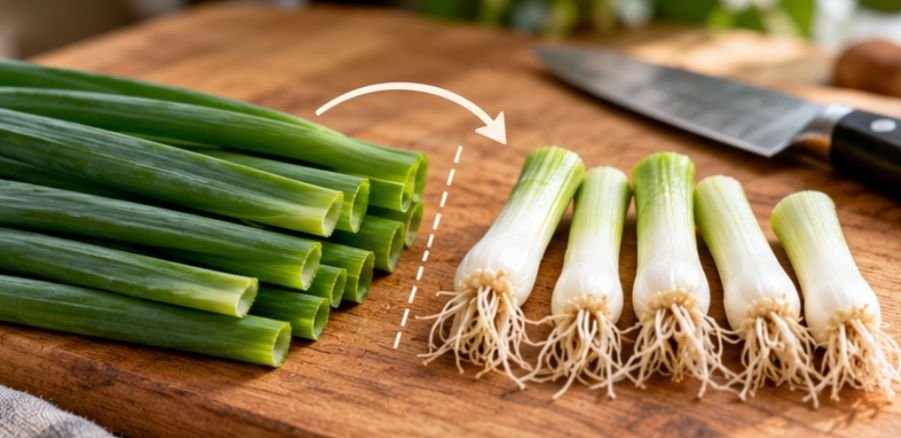
Use the green tops for cooking, but leave roughly 1 to 2 inches of the white portion attached to the roots.
More important than getting the measurement perfect is keeping the root plate intact. A firm white base with visible roots is a much better candidate than one that is mushy, badly damaged, or dried out.
University of Florida IFAS Extension recommends retaining the rooted lower portion of scallions before placing it in water.
2. Stand the Roots Upright
Place several bases side by side in a narrow container. Keeping them relatively snug helps prevent the onions from falling over as their new leaves become taller.
The root ends should point down.
3. Add Only Shallow Water
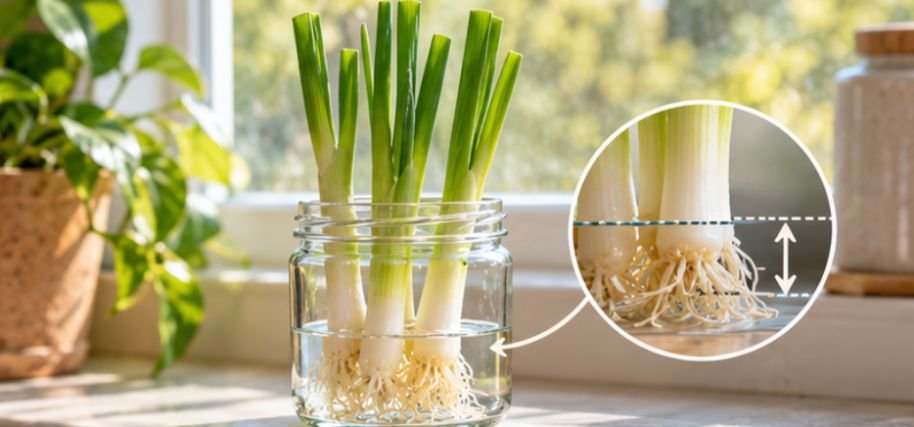
Pour in enough clean tap water to cover the roots and the very bottom of the white stalk.
Avoid drowning most of the white section. Deep standing water creates persistently wet plant tissue and can encourage softening, unpleasant odors, and decay.
Think “roots in water,” rather than “onions submerged.”
4. Give Them Good Window Light
Place the container beside a bright window. Oregon State University Extension says bunching onions grow successfully in containers and can be kept indoors near a sunny window. It also notes that these onions perform best with good light.
A south- or west-facing window will often provide stronger light in many US homes, although excessively hot direct afternoon sun can warm a tiny glass quickly. Turn the container occasionally if the leaves begin bending heavily toward the window.
5. Replace the Water Every Two or Three Days
This small step makes an outsized difference. University of Florida guidance recommends changing the water every few days when regrowing scallions. Cloudiness, slime, floating debris, or an unpleasant smell are signals to replace it sooner.
Rinse the container and roots gently before adding fresh water. Do not simply keep topping off increasingly cloudy water.
What You Should See During the First Week
Regrowth is often surprisingly visible. During the first few days, fresh green tissue typically begins extending from the center of the cut stalk. The roots may also become longer and more numerous.
Under favorable light and temperature conditions, you can often have several inches of usable green growth within roughly a week.
Growth rates differ, so avoid treating seven days as a deadline. A cool northern windowsill in January may produce slower growth than a warm, bright kitchen in May.
The easiest harvest test is visual: wait until the shoots are long enough to provide a useful amount without cutting all the way back into the white base.
How to Harvest Without Ending the Experiment
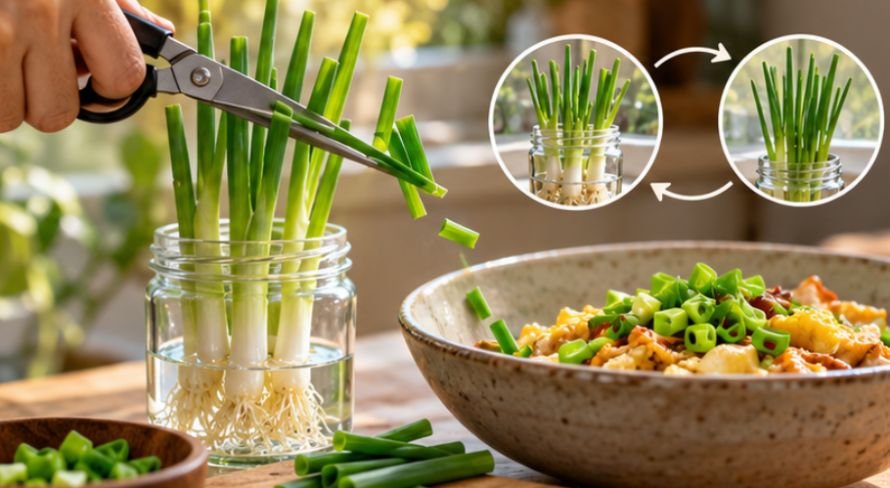
Use clean kitchen scissors and cut the green leaves above the white portion.
You can harvest the whole green top or snip only what you need for scrambled eggs, baked potatoes, soups, tacos, salads, noodle dishes, or stir-fries.
Freshly regrown green onions can add flavor to simple, affordable meals without requiring a separate trip to the grocery store. For more budget-friendly meal inspiration, explore these cheap air fryer recipes for families and discover easy ways to make everyday cooking more economical.
Leaving the growing base intact gives it another opportunity to send up leaves.
However, the common claim that one grocery-store onion will produce “unlimited green onions” deserves skepticism.
Why Water-Grown Onions Eventually Get Weaker
Plain water provides moisture but not the complete mineral nutrition available in fertile soil or a properly formulated hydroponic solution.
That means a grocery-store root end may regrow impressively at first but gradually produce thinner, paler, or slower leaves after repeated cutting.
For longer-term growing, transfer healthy rooted plants to potting mix.
Oregon State recommends a container at least 6 inches deep with drainage holes for container-grown bunching onions. Keep the soil evenly moist and give the plants strong light.
This soil transition turns a short kitchen experiment into something closer to normal container gardening.
Growing fresh ingredients at home is one way to complement other budget-friendly cooking habits. You can also learn how to stretch ground beef for multiple meals to plan several affordable dishes from one batch of ingredients, with homegrown green onions adding fresh flavor to the finished meals.
Do Not Ignore Food Safety
A windowsill jar is still producing food, so cleanliness matters.
The FDA recommends washing fresh produce thoroughly under running water before eating it and specifically advises against using soap, detergent, or commercial produce washes. Washing reduces surface contamination but does not guarantee elimination of every microorganism.
Use clean scissors, a clean container, and fresh potable water. Keep the jar away from raw meat preparation areas and places where pets can reach it.
The FDA has also emphasized that water contacting green onions can act as a vehicle for microbial contamination, which reinforces why clean water and good kitchen hygiene matter.
Water or Soil: Which Is Better?
Use water if your goal is speed, simplicity, and one or more quick harvests. You can see the roots, there is virtually no setup cost, and the project fits on even a tiny apartment windowsill.
Choose soil if you want stronger plants and a better chance of extended production.
Growing a few ingredients at home can complement other strategies for keeping grocery costs down. These cheap meals using canned beans and rice offer practical ideas for combining affordable pantry staples with fresh ingredients, such as homegrown green onions, to create satisfying everyday meals.
The best compromise is often to start the bases in water, enjoy the rapid visible regrowth, and move the healthiest ones into potting mix once you decide they are worth keeping.
Frequently Asked Questions
1. How long does it take green onions to regrow in water?
New growth can appear within a few days. Depending on temperature, light, and the condition of the roots, you may have usable green shoots in about a week.
2. How often should I change the water?
Replace it roughly every two to three days, or sooner if it becomes cloudy, develops an odor, or accumulates plant debris.
3. Can green onions grow permanently in plain water?
They may survive several harvests, but growth usually weakens because plain water lacks complete plant nutrition. Moving healthy plants into soil supports better long-term growth.
4. How much of the green onion should stay above water?
Keep the roots submerged while leaving most of the white stalk above the waterline. Excessively deep water can encourage soft, decaying tissue.
Final Thoughts
What makes how to regrow green onions in water on windowsill worth trying is not the promise of never buying scallions again. It is how little effort turns something headed for the trash into another usable harvest.
Save a healthy rooted base tonight, place its roots in a small glass of clean water, and give it a bright window. Change that water every couple of days and watch what happens. If the plant stays vigorous, move it into soil for longer production. That humble grocery-store scrap is a useful reminder that sometimes the easiest garden starts before the compost bin.