A pound of ground beef does not have to mean one dinner. Used strategically, it can become the flavor base for several family meals—especially when beans, lentils, rice, vegetables, potatoes, or pasta provide the bulk.
Learning how to stretch ground beef for multiple meals is less about watering down dinner and more about changing the role meat plays on the plate. Instead of serving four large portions of beef, you can distribute smaller amounts through tacos, pasta sauce, rice bowls, chili, casseroles, and other dishes where seasonings and supporting ingredients carry plenty of flavor.
Iowa State University Extension specifically recommends stretching meat with beans, lentils, rice, pasta, and vegetables. It also notes that a pound of boneless ground beef normally serves about four people before any stretching ingredients are added.
Think of Ground Beef as an Ingredient, Not the Entire Meal
The easiest mistake is building dinner around a large mound of meat and then looking for side dishes. Reverse that formula.
Build the meal around beans, grains, vegetables, pasta, tortillas, potatoes, or sauce, then add enough browned beef to provide its familiar savory flavor.
The American Heart Association recommends emphasizing vegetables, whole grains, beans, peas, and lentils while using smaller portions of lean meat. It also considers about 3 ounces of cooked meat a typical portion.
That makes meat-stretching useful beyond grocery budgeting: adding plant foods can increase fiber and diversify what is on the plate.
The One-Cup Stretching Rule
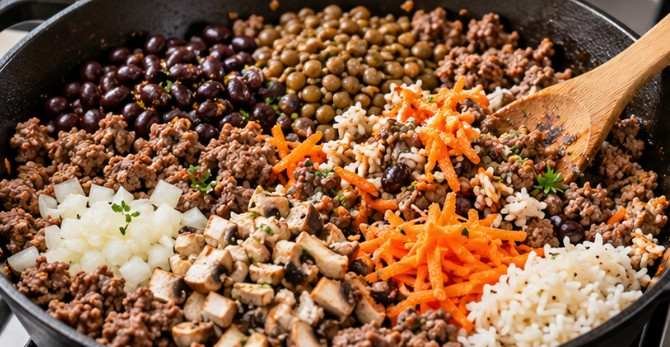
There is no mandatory ratio, but a practical starting point is adding roughly 1 cup of a compatible cooked ingredient to each pound of ground beef. You can increase the amount once you know what works for the dish.
Beans for Tacos, Chili, and Burritos
Black beans, kidney beans, or pinto beans work particularly well because their flavor fits naturally with seasoned beef.
Try combining:
1 pound browned beef
1 drained can of beans
onion
taco seasoning
a little salsa or tomato sauce
Suddenly, the mixture can fill considerably more tacos than beef alone. Iowa State Extension recommends using beans with ground beef or turkey in tacos and identifies dried beans as an economical protein choice.
Lentils for Sauces and Soups
Lentils are one of the least noticeable additions when properly seasoned.
Brown or green lentils retain enough texture to resemble small beef crumbles, making them useful in chili and taco filling. Red lentils soften considerably, so they work particularly well in tomato sauces, soups, and sloppy-joe-style mixtures.
Start conservatively: combine about 3/4 to 1 cup cooked lentils with each pound of beef and adjust from there.
Rice and Other Grains
Cooked rice absorbs seasoning and stretches portions quickly without overpowering the beef.
It works especially well in:
stuffed peppers, burrito bowls, cabbage rolls, skillet dinners, fried rice, casseroles, and soups.
Barley can provide a chewier texture in soups, while quinoa can work in taco bowls or stuffed vegetables.
Vegetables That Practically Disappear
Finely chopped mushrooms are particularly effective because their savory flavor complements beef. Onion, carrots, zucchini, cabbage, bell pepper, and cauliflower can work too. Chop or pulse them finely, sauté until excess moisture cooks away, then mix in the browned meat.
Frozen vegetables are another practical option. The American Heart Association recommends keeping unsauced frozen vegetables available as inexpensive meal add-ins.
Turn One Pound Into Four Different Meals
If I wanted maximum variety from one batch, I would not fully season the beef while cooking it.
Brown the meat with just onion, garlic, black pepper, and a modest amount of salt. Then divide it into four portions.
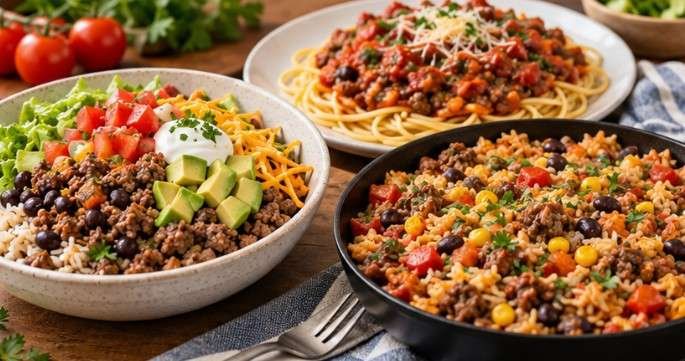
Meal 1: Beef and Bean Taco Bowls
Mix one portion with black or pinto beans, taco seasoning, and salsa. Serve over rice with lettuce, corn, tomatoes, and tortillas.
Meal 2: Vegetable Beef Fried Rice
Use another portion with leftover rice, frozen mixed vegetables, scrambled egg, and low-sodium soy sauce. Here, beef becomes a seasoning ingredient rather than half the bowl.
Meal 3: Loaded Pasta Sauce
Sauté mushrooms, carrots, and onions before adding another beef portion and marinara. Serve over spaghetti or another inexpensive pasta. The vegetables and sauce provide most of the volume while the beef gives the sauce a richer flavor.
Meal 4: Potato-Topped Beef Casserole
Combine the final portion with peas, carrots, onion, broth, and seasoning. Top it with mashed potatoes and bake until hot. Potatoes turn a relatively small quantity of beef into a substantial family meal.
This approach pairs particularly well with practical one-pot cooking hacks because grains, vegetables, sauce, and small amounts of meat can often cook together.
Meatloaf and Meatballs Need a Different Strategy
Beans and rice work beautifully in loose beef mixtures, but shaped dishes need ingredients that help hold everything together.
Rolled oats or breadcrumbs are better choices for meatloaf and meatballs.
A common approach is adding roughly 1/2 to 1 cup of oats or breadcrumbs per pound, along with egg and enough liquid to prevent dryness.
Rather than experimenting blindly with the ratios, start with a tested meatloaf recipe and adjust future batches gradually.
Textured vegetable protein, or TVP, can also extend ground meat after being rehydrated. It is especially useful in strongly flavored foods such as tacos, chili, and pasta sauces.
A Better Batch-Cooking Process
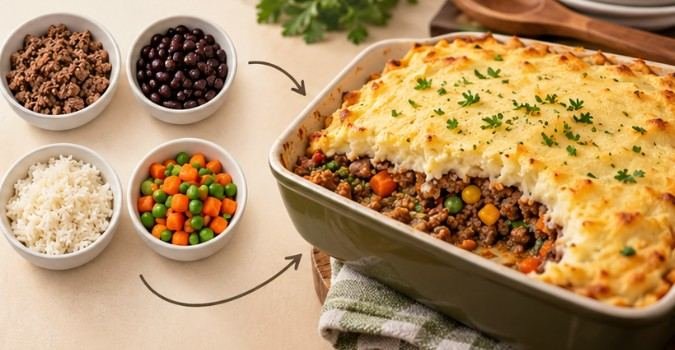
For how to stretch ground beef for multiple meals to actually save time, preparation matters as much as ingredients.
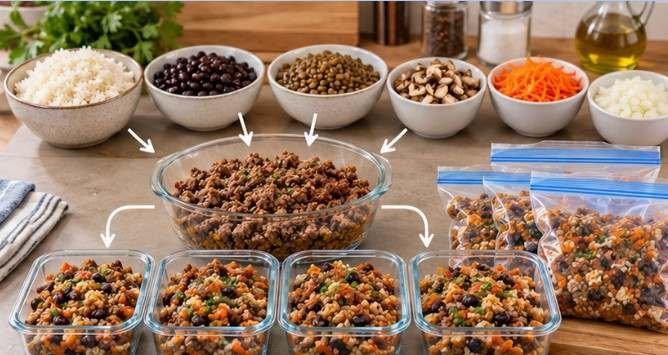
Brown several pounds during one cooking session if you have purchased a larger package. Keep the seasoning neutral, drain excess fat when appropriate, and portion the meat according to upcoming meals.
Label freezer containers by amount rather than simply writing “ground beef.” For example:
“1 cup cooked beef — tacos”
is considerably more useful three weeks later.
Food safety still matters when batch cooking. USDA guidance says ground beef should reach an internal temperature of 160°F, measured with a food thermometer.
The FSIS recommends refrigerating perishable cooked food within two hours, or within one hour when temperatures exceed 90°F. Refrigerated leftovers should generally be eaten within three to four days.
When Stretching Beef Can Go Too Far
More filler is not automatically better. A burger patty relies heavily on beef texture, so adding large quantities of beans or vegetables changes the product substantially. The same applies to dishes where beef itself is meant to be the centerpiece.
Flavor can also become diluted. If you double the volume of a taco mixture, expect to increase spices, garlic, onion, tomato, or other seasonings accordingly.
Choose lean beef where appropriate, too. The American Heart Association recommends lean or extra-lean ground meat and notes that plant proteins such as beans and lentils provide fiber without the saturated fat found in meat.
Frequently Asked Questions
1. How much can I stretch one pound of ground beef?
Adding 1–2 cups of beans, lentils, vegetables, or cooked grains can substantially increase the volume. The ideal amount depends on the recipe and desired beef flavor.
2. What is the cheapest ingredient for stretching ground beef?
Dried beans and lentils are often strong budget choices. Iowa State Extension identifies dried beans as an especially economical protein source.
3. Can I stretch ground beef with oatmeal?
Yes. Rolled oats work best in meatloaf, meatballs, and similar dishes because they absorb moisture and help bind the mixture.
4. Can stretched ground beef be frozen?
Yes. Cool cooked food promptly, divide it into freezer-safe portions, label the containers, and freeze portions you will not use within the refrigerated leftover window.
Final Thoughts
The most effective lesson in how to stretch ground beef for multiple meals is surprisingly simple: stop asking how many servings a pound of beef provides and start asking how many meals can benefit from a little beef flavor.
Beans can carry taco night. Rice can carry a skillet dinner. Vegetables and marinara can carry pasta night, while potatoes can turn a small amount of beef into a hearty casserole.
Once ground beef becomes one component instead of the centerpiece, one package becomes much more flexible. Stretch the meat with ingredients that add genuine nutrition, texture, and substance, and the meals will feel intentional rather than merely inexpensive.