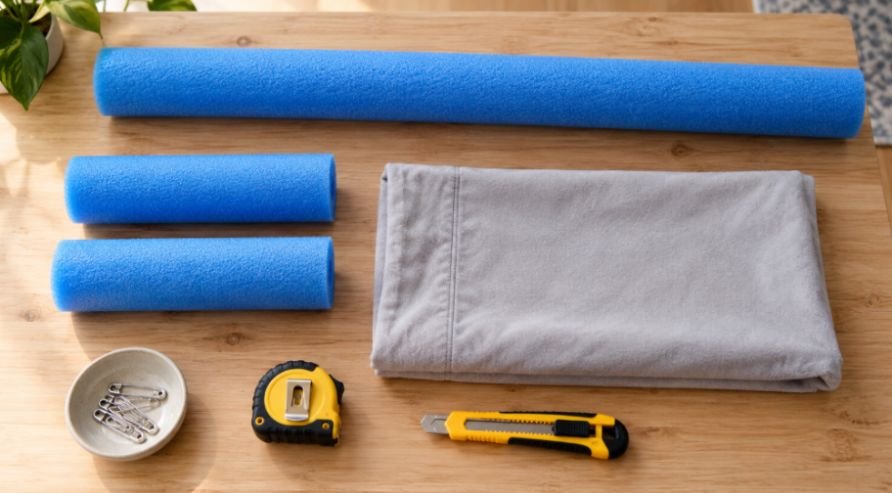
A freezing breeze across the living room floor usually starts at a quarter-inch gap under your exterior door. Last November, my infrared thermometer clocked the floor temperature by my entryway threshold at 48°F while the thermostat read 70°F. Rather than spending twenty-five dollars on a retail draft guard, I built a zero-sew double-sided DIY draft stopper for winter doors Dollar Tree style using items I grabbed for less than three dollars.
The standard cloth door snake you kick against the baseboard works until someone opens the door. Once the door swings inward, that single beanbag gets pushed aside, leaving the opening completely exposed until you bend down to reset it. A twin-tube slide-under stopper solves this by clipping directly onto the door bottom, gliding effortlessly back and forth whenever the door moves.
The Real Cost of That Winter Floor Breeze
Air infiltration accounts for roughly 25% to 40% of the energy used for heating and cooling in a typical American home, according to the U.S. Department of Energy. When freezing outdoor air enters beneath an unsealed exterior door, warm air escapes elsewhere through the ceiling and attic like an open chimney.
Standard door sweeps often fail because builder-grade vinyl deteriorates, tears, or hardens into brittle plastic during sub-freezing temperatures. Cold air dumps directly across your hardwood or tile floors, cooling your feet and forcing your furnace to run extended heating cycles.
Why Single Door Snakes Keep Failing
Weighted fabric rolls or stuffed door snakes only protect your home while the door remains motionless. In high-traffic entryways, kids and pets constantly bump them out of alignment.
If a draft guard fails to maintain continuous contact against the door and threshold, outdoor air can still enter through gaps. The experts at This Old House explain how to weatherproof exterior doors using weatherstripping and door sweeps.
Dollar Tree Supply Run: What Works and What Fails
Walking down the discount store aisles with thermal efficiency in mind requires careful material selection.
A budget-friendly DIY mindset can also extend to personal care, where simple homemade options may appeal to those looking to save money. Explore these DIY face mask recipes for ideas to complement your at-home routines.
Not every craft or cleaning item creates an effective air barrier.
Essential Materials Under Five Dollars
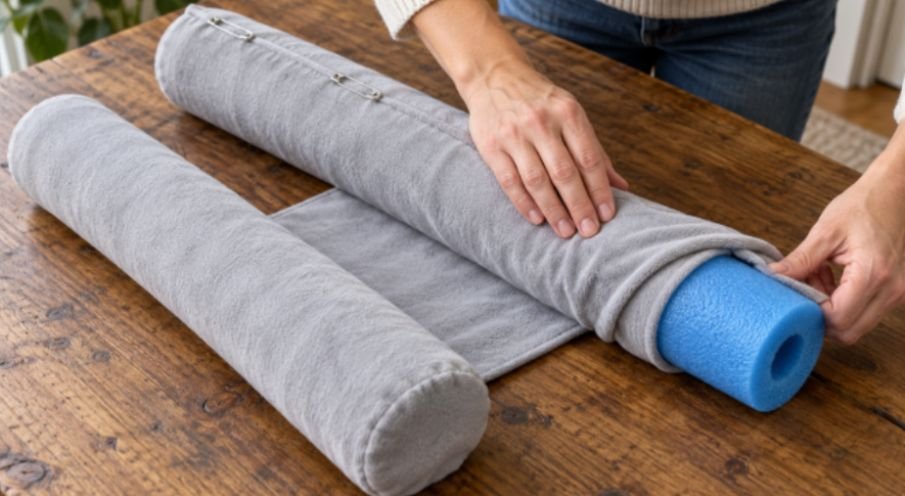
- 1 Foam Pool Noodle (or Foam Pipe Insulation): Pool noodles offer closed-cell foam construction that provides outstanding thermal resistance for roughly $1.25. If pool noodles are out of season during deep winter, check the hardware section for tubular foam pipe wrap.
- 1 Standard Microfiber Pillowcase: Microfiber or polyester weaves resist moisture from winter snow tracked indoors much better than thin cotton.
- Safety Pins (Size 2 or Size 3): Medium-gauge steel pins provide sufficient tension to hold the fabric roll without ripping the cloth seam under door shear.
- Utility Knife and Measuring Tape: Standard household tools are all you need to cut and bevel the foam cores cleanly.
While hunting for practical ways to cut home maintenance costs, you can also apply this mindset to other household staples; for example, you can make cheap homemade laundry detergent powder to stretch your monthly budget even further.
Assembling the Double-Sided Pool Noodle Draft Stopper
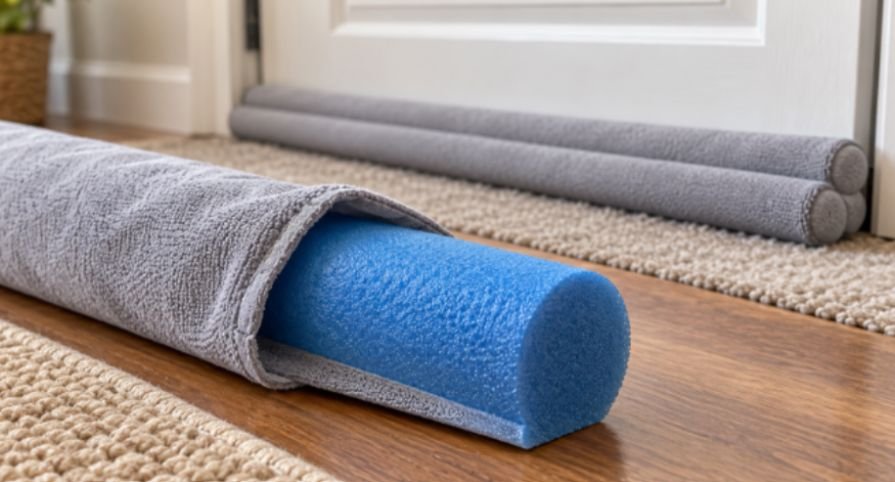
This build requires no sewing, hot glue guns, or permanent modifications to your door frame. You can complete the entire assembly on a kitchen table in about ten minutes.
Step 1: Cutting Foam to Match Door Width
Measure the exact width of your closed door between the interior door stops. Standard residential interior and exterior doors measure 30, 32, or 36 inches across.
Using a marker, transfer this measurement onto your Dollar Tree pool noodle twice. Slice through the foam using a sharp utility knife or a serrated kitchen bread knife. Ensure your cuts are square and flush so the foam seats tight against the door edges without hanging out past the frame. You now have an inside roller and an outside roller.
Step 2: Channeling the Pillowcase Sleeve
Lay the microfiber pillowcase completely flat on a wide table or a clean floor with the open hem facing to your right. Slide the first cut pool noodle deep into the pillowcase until it butts directly against the closed bottom seam.
Smooth out all fabric bunches along the length of the noodle. Trapped fabric bunches create localized friction spots that drag against the floor once the door moves.
Step 3: Rolling and Pinning the Inboard Tube
Pull the fabric taut over the first noodle. Roll the noodle forward toward the center opening of the pillowcase, wrapping the fabric around the circumference of the foam cylinder two full turns.
Hold the rolled fabric tight and insert three safety pins along the seam line. Space one pin at each end roughly two inches from the edge, and position the third pin dead center.
Step 4: Calibrating Door Clearance and Outboard Pinning
Take your assembly over to your door threshold to calibrate the center bridge. The flat fabric section between the two noodles must match your door’s thickness precisely. As highlighted by Family Handyman, standard interior doors measure 1-3/8 inches thick, whereas exterior entry doors measure 1-3/4 inches thick.
Slide the pinned noodle underneath the door from the interior side until the foam tube rests snug against the door base. Insert the second pool noodle into the remaining pillowcase opening and push it against the exterior face of the door.
Pull the remaining loose fabric over the outside noodle, mark the wrap boundary, and pull the entire assembly out from under the door. Roll the second side tightly and secure it with another set of safety pins.
The Friction Problem: Conquering Carpet Drag and Floor Gouges
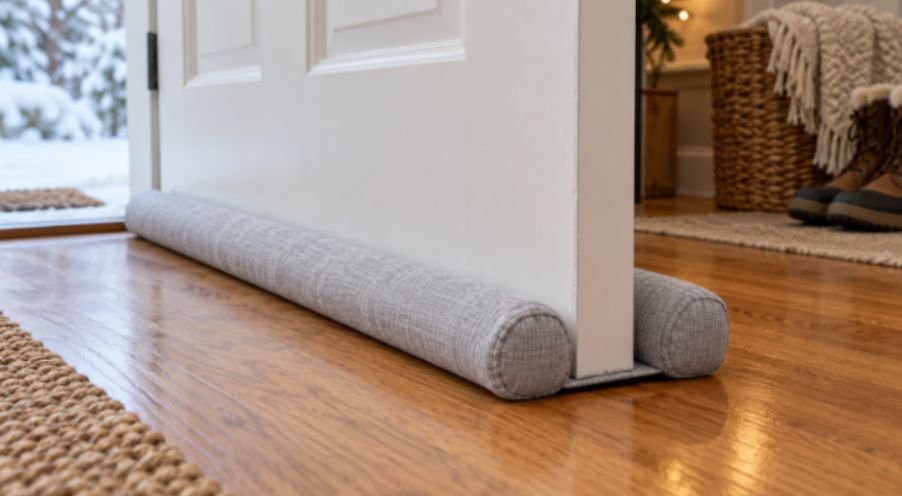
Most online tutorials gloss over what happens after installation: the door gets stuck, or exposed safety pins drag across expensive floors.
Carving the Bevel Glide for High-Pile Rugs
Closed-cell pool noodles measure around 2.25 to 2.5 inches in diameter. If the gap between your door base and carpet pile is narrow, the bottom curve of the round noodle creates significant friction.
Remove the foam from the fabric sleeve. Using a sharp utility knife, slice a flat, shallow 45-degree angle along the bottom inner edge of each noodle. This bevel creates an angled ski profile that glides over thick carpets and entryway rugs rather than plowing into the fiber weave.
The Reverse-Pin Rule for Floor Safety
Safety pins placed hastily will scratch hardwood or vinyl plank flooring. Always insert safety pins with the pointed clasps directed upward toward the ceiling or inward against the foam core. The flat, smooth curvature of the fabric must remain the only surface that makes contact with your floor.
Frequently Asked Questions
1. How much money does an under-door draft stopper actually save on winter heating?
Sealing drafts under exterior doors can cut total heating costs by 5% to 15% depending on local wind exposure and home insulation.
2. Can I wash this pillowcase draft stopper when it collects winter slush and salt?
Unpin the safety pins, pull out both foam noodles, and run the pillowcase through your regular washing machine cycle.
3. What should I do if the pool noodle is too thick to fit under my door?
Shave the bottom of the foam cylinder down with a utility knife to create a flat profile, or switch to smaller pipe insulation tubing.
4. Will this DIY draft guard work on doors that sit over high-pile carpet?
Yes, carve a 45-degree bevel onto the bottom-facing edge of the foam rollers and use a slick microfiber or satin pillowcase.
Stop Paying to Heat the Outdoors
Draftproofing your home does not require expensive custom carpentry or commercial thermal gear. A few dollars, a pair of sharp scissors, and ten minutes of prep can lower your energy bills while eliminating winter drafts instantly.
Making small, affordable improvements can help keep household projects manageable, especially when supplies and tools are stored efficiently. These DIY storage solutions ideas offer practical inspiration for organizing everyday items and keeping home improvement essentials accessible.
Grab a pool noodle and a spare pillowcase this weekend, install your dual-glide seal, and keep your living spaces warm throughout the colder months.