A work lunch does not have to be hot to be filling, safe, or satisfying. In fact, some of the easiest cheap lunch ideas for work no microwave require less cooking than the leftovers many people routinely bring to the office.
The real trick is not finding dozens of recipes. It is learning how to combine a few inexpensive ingredients—beans, eggs, grains, tortillas, vegetables, canned fish, chicken, cheese, and fruit—into meals that still taste good cold.
There is one rule that matters before everything else: temperature. USDA recommends packing perishable lunches in an insulated bag with at least two cold sources when refrigeration is unavailable. Once that problem is solved, inexpensive lunches become surprisingly easy.
Build a Cheap Cold Lunch Instead of Buying One
Buying lunch near work can quietly become one of those expenses that feels small because it happens $10 or $15 at a time.
A cheaper approach is to build each lunch from four components:
Protein + inexpensive base + produce + flavor
For example:
- Chickpeas + pasta + cucumber + Italian dressing
- Egg salad + whole-wheat tortilla + spinach + mustard
- Chicken + rice + chopped vegetables + vinaigrette
- Peanut butter + whole-grain bread + banana + cinnamon
You do not need every meal to look like a restaurant bowl.
Harvard’s Healthy Eating Plate suggests making roughly half a meal vegetables and fruit and dividing the remaining portion between whole grains and healthy protein. That model works surprisingly well for a packed lunch, too.
For a tighter grocery budget, start with what is already in the pantry before buying specialty lunch ingredients. These strategies for saving money on groceries can also help reduce the cost of the ingredients you use throughout the week.
Another way to lower meal costs is to stretch ground beef for multiple meals by combining smaller portions with beans, rice, pasta, or vegetables for several affordable lunches and dinners.
12 Cheap Lunch Ideas That Taste Good Cold
Save time when preparing packed lunches by using these fast chopping hacks for vegetables to prep ingredients quickly and make fresh wraps, salads, and grain bowls easier to assemble throughout the week.
1. Hummus and Crunchy Vegetable Wrap
Spread hummus over a whole-wheat tortilla, then add shredded carrots, cucumber, spinach, cabbage, or whatever vegetables need using up.
Feta is good but optional. Beans or leftover chicken can make the wrap more substantial.
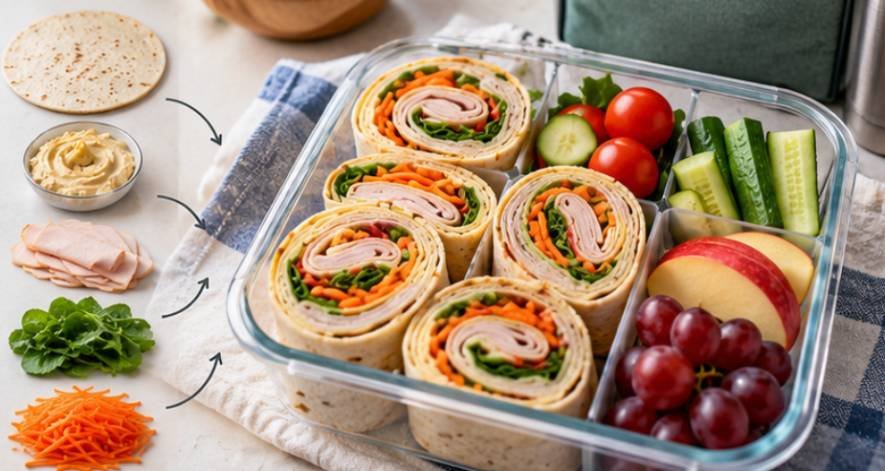
2. Turkey Pinwheels
Cover a tortilla with mustard or a thin layer of cream cheese. Add turkey, spinach, and a small amount of shredded cheese.
Roll tightly and cut into rounds.
Deli meat is convenient, although it does not need to become your everyday protein source. Beans, eggs, chicken, nuts, seeds, and soy foods can help add variety; USDA’s MyPlate includes all of these within its protein-food guidance.
3. Cold Pasta Salad
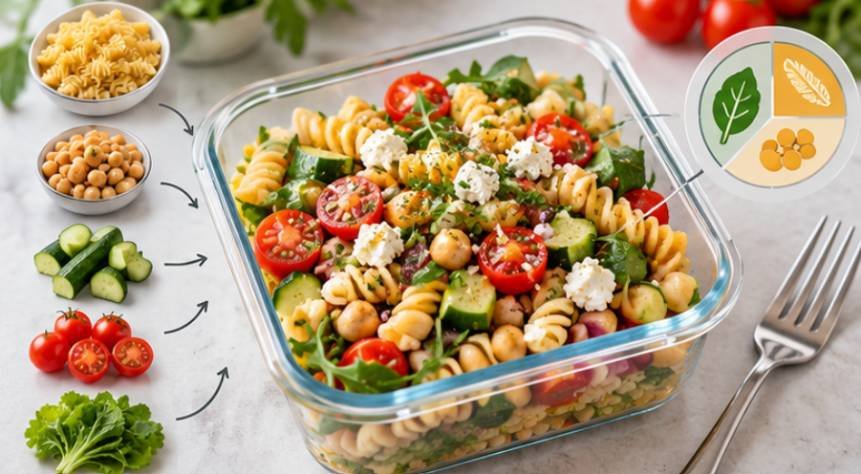
Cook rotini, penne, or another short pasta and chill it thoroughly.
Add inexpensive ingredients such as chopped peppers, cucumbers, chickpeas, olives, cheese cubes, shredded carrots, or leftover chicken. Toss everything with Italian dressing.
Make a large batch and portion it into several lunches.
4. Chickpea Mediterranean Bowl
Drain canned chickpeas and combine them with cucumber, tomato, onion, parsley, and a little feta.
Add rice, bulgur, couscous, or quinoa if you need more carbohydrates.
A lemon-and-olive-oil dressing keeps it from tasting like another bland meal-prep bowl.
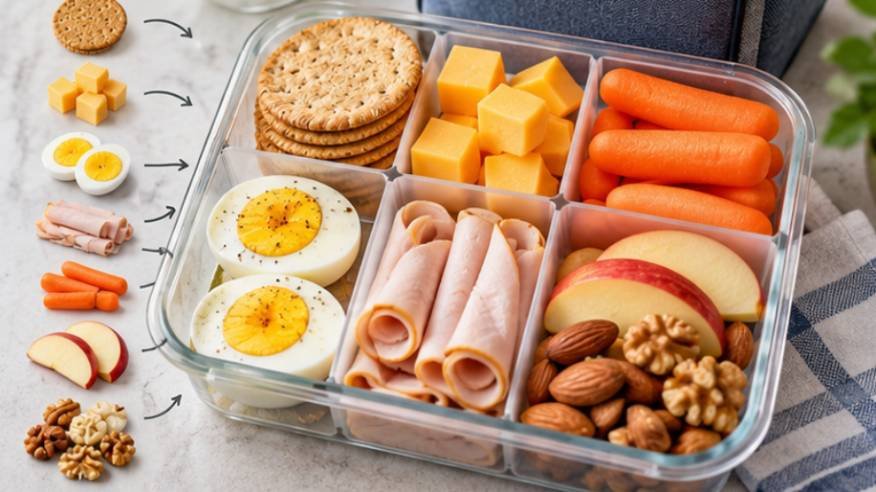
5. Adult Lunchable
Pack crackers alongside two or three inexpensive components:
cheese cubes, boiled eggs, hummus, carrots, apple slices, grapes, nuts, turkey roll-ups, or sunflower seeds.
This format is particularly useful if you dislike eating one large dish at lunch.
6. Egg Salad and Crackers
Hard-boiled eggs remain one of the simplest lunch proteins.
Mash them with mayonnaise, mustard, pepper, and a little pickle relish. Pack the mixture separately from bread or crackers so nothing becomes soggy.
7. Tuna and White Bean Salad
Stretch one can of tuna by mixing it with drained white beans.
Add lemon juice, olive oil, celery, pepper, parsley, or chopped pickles. The beans add volume and fiber without requiring another expensive protein.
8. Chicken Caesar Wrap
Leftover chicken becomes much more appealing when turned into something intentionally cold.
Combine chopped chicken with romaine, Parmesan, and Caesar dressing, then wrap it tightly in a tortilla. Keep dressing light if the wrap will sit for several hours.
9. Peanut Butter Banana Sandwich
Not every lunch needs meat or cheese. Peanut butter, banana, and whole-grain bread make an inexpensive lunch requiring almost no preparation. Add an apple, carrots, or yogurt if refrigeration is available.
10. Bean and Corn Salad
Mix black beans with corn, diced bell pepper, tomato, cilantro, and lime juice.
Eat it as a salad or scoop it with tortilla chips. Preparing dried beans from scratch can reduce the cost further if you cook regularly.
11. Overnight Grain Bowl
Use leftover brown rice, barley, quinoa, couscous, or farro as the base. Add beans or chicken, chopped vegetables, herbs, and dressing. The important step is cooling cooked grains promptly rather than leaving them sitting at room temperature. The FDA recommends keeping cold perishable food at 40°F or below.
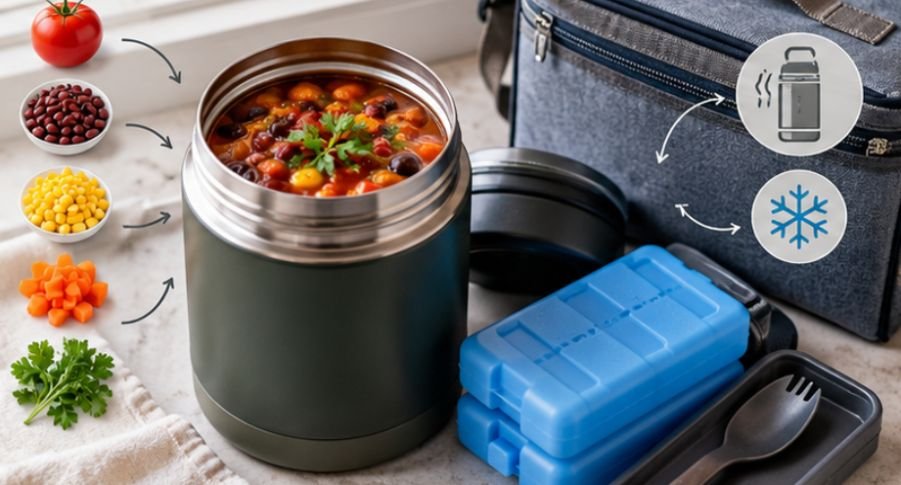
12. Thermos Chili, Soup, or Pasta
“No microwave” does not necessarily mean “cold lunch.”
A good insulated food container lets you heat soup, chili, oatmeal, pasta, or other leftovers at home and carry them hot.
Preheating the container with boiling water before filling it can improve heat retention. The Academy of Nutrition and Dietetics specifically recommends preheating insulated containers when packing hot foods such as soups and stews.
A big batch made using these one-pot cooking hacks can also provide several work lunches with relatively little cleanup.
The 2–4 Lunch Formula
Instead of buying ingredients for a different recipe every day, choose overlapping ingredients.
Suppose you buy tortillas, eggs, chickpeas, carrots, spinach, cheese, apples, hummus, and a bag of rice.
Those ingredients can become:
Monday: hummus vegetable wrap
Tuesday: egg-and-spinach wrap
Wednesday: chickpea rice bowl
Thursday: snack box with egg, cheese, carrots, and apple
Friday: chickpea hummus wrap
The exact price depends heavily on where you shop and current food prices, so a universal “$2 lunch” promise is unrealistic.
The better target is simple: use each perishable ingredient in at least two meals before buying something new. That reduces both spending and food waste.
Do the Five-Minute Lunch Test
Before packing tomorrow’s lunch, ask five questions:
- Protein: Does this contain something filling such as beans, eggs, chicken, tuna, hummus, nuts, or cheese?
- Produce: Can I add a fruit or vegetable already in the refrigerator?
- Texture: Is there something crisp, creamy, chewy, or crunchy?
- Temperature: Will perishable food remain properly chilled or hot?
- Waste: Am I using an ingredient that might otherwise be thrown away?
That last question often saves more money than hunting for another “cheap recipe.”
Food Safety Matters More Without an Office Refrigerator
Packing mayonnaise is not automatically dangerous; improper temperature control is the bigger problem.
The FDA advises keeping cold foods at 40°F or below and notes that perishable food generally should not remain in the 40°F–140°F temperature range for more than two hours, or one hour when conditions exceed 90°F.
University of Minnesota Extension similarly advises starting with already-chilled food and using plenty of ice or frozen gel packs during transport.
If you have neither refrigeration nor a reliable insulated bag, lean toward shelf-stable choices such as whole fruit, nut butter, unopened tuna packets, crackers, nuts, dried fruit, or other foods that do not require cold storage.
Frequently Asked Questions
1. What can I bring for lunch if my workplace has no microwave?
Try wraps, pasta salad, chickpea bowls, sandwiches, tuna salad, snack boxes, cold grain bowls, or food carried hot in an insulated thermos.
2. How do I keep my work lunch cold until noon?
Use an insulated lunch bag with at least two cold sources, such as frozen gel packs or a frozen water bottle, following USDA guidance.
3. What are the cheapest proteins for work lunches?
Eggs, beans, lentils, chickpeas, peanut butter, canned tuna, and homemade hummus are versatile options. Actual cost varies by store and region.
4. Can I meal-prep cold lunches several days ahead?
Yes, but ingredients vary in storage life. Keep prepared food properly refrigerated and pack wet ingredients separately when necessary to preserve texture and freshness.
Cheap Lunches Work Best When They Are Simple
The smartest cheap lunch ideas for work no microwave are rarely elaborate recipes. They are combinations you can repeat without getting bored: a grain or tortilla, an affordable protein, whatever produce needs using, and one flavorful dressing or condiment.
Make safety part of the routine, not an afterthought. Chill perishable food properly, use insulated containers when refrigeration is unavailable, and plan several lunches around the same grocery ingredients.
Once you stop expecting every work lunch to be a reheated dinner, the options multiply. A good lunch can be inexpensive, portable, filling, and genuinely enjoyable without ever touching a microwave.