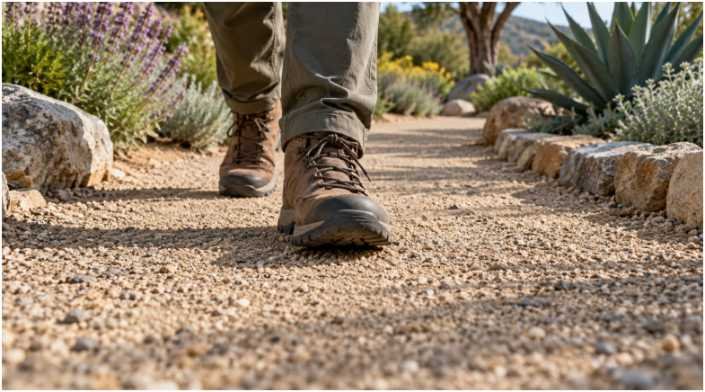
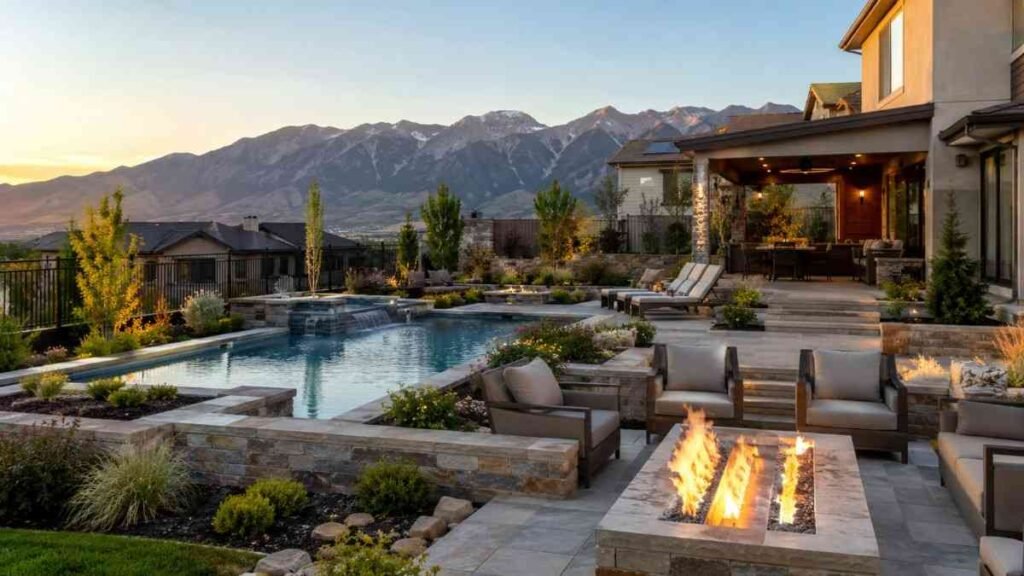
Utah landscaping is not a generic design exercise. It is a balancing act between beauty, engineering, water stewardship, and durability in one of the most demanding residential environments in the West. The difference between a landscape that looks polished for a season and one that performs for years usually comes down to whether the design respects climate, soil, elevation, and how families actually use the space.
That is why the strongest projects in this market are not built around trends. They are built around constraints. Freeze-thaw cycles, intense sun, variable soils, irrigation efficiency, and the need for year-round function all shape what works and what fails. Companies like Cottonwood Landscaping understand that the best results come from designing outward from these realities, not trying to ignore them.
The Real Challenge Behind Utah Landscaping
The biggest mistake in Utah landscaping is treating it like a warm-climate or coastal project with a few local adjustments. Utah’s conditions are specific enough that design assumptions can become expensive mistakes. Soil composition can shift dramatically from one property to the next. Water availability matters. Seasonal temperature swings put stress on hard surfaces, plants, and drainage systems.
A landscape that ignores those factors may still look impressive at installation. The issue appears later, when pavers shift, walls crack, irrigation proves inefficient, or plantings struggle through the first hard season. Strong operators know that the first design question is not “What looks good?” It is “What will still look good after years of temperature swings and changing use?”
For Cottonwood Landscaping, that mindset is central. Their work reflects the reality that Utah properties need more than surface-level design. They need informed construction, careful material selection, and a plan that aligns with the land itself.
Why Climate-Responsive Design Matters More Than Trend-Driven Design
Trend-driven landscapes often prioritize short-term visual impact. Climate-responsive landscapes prioritize performance. That distinction matters in Utah because outdoor spaces are expected to endure intense sun, cold winters, and shifting moisture conditions without becoming high-maintenance liabilities.
A good example is the difference between a decorative surface that looks great in summer and a layout that is engineered to handle movement through freeze-thaw cycles. The latter may be less flashy in a photo, but it is more valuable over time. The same is true for plant selection. Native and drought-tolerant choices are not just practical; they are often the most sophisticated answer when the goal is a landscape that ages well.
What Strong Utah Projects Get Right From The Start
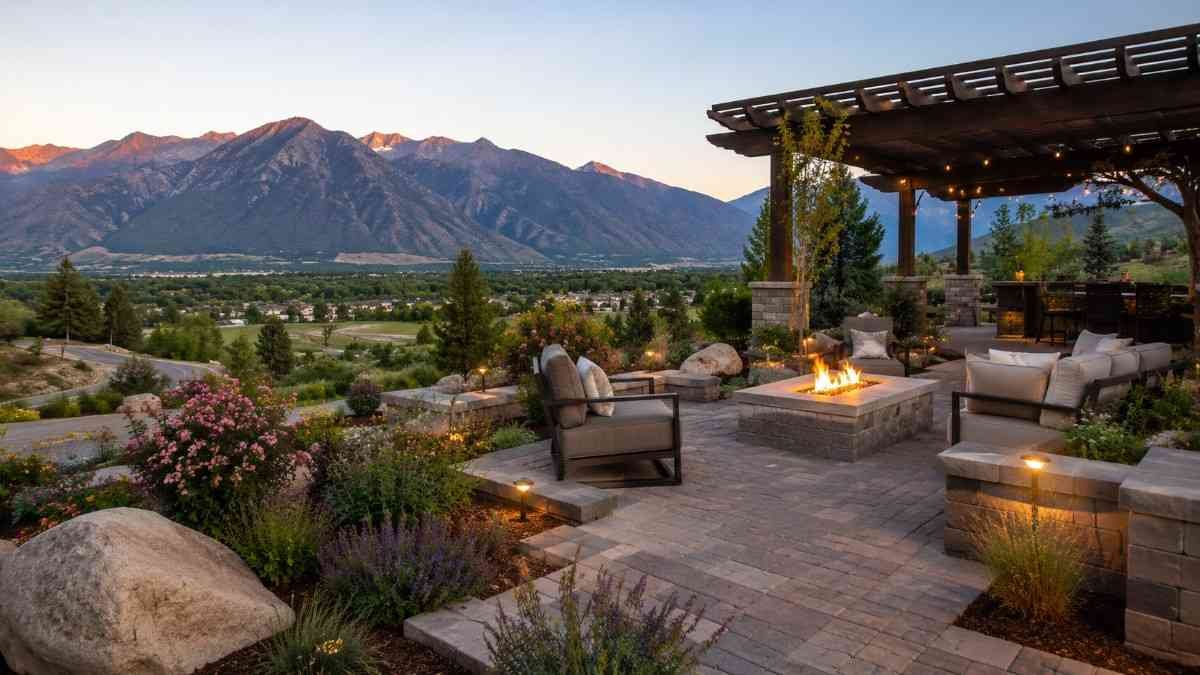
The most successful outdoor spaces in Utah are usually the ones where design and construction are treated as one integrated process. That matters because many landscape problems are not planting problems or masonry problems alone. They are coordination problems. Poor grading affects drainage. Weak drainage affects hardscape longevity. Bad sequencing affects everything downstream.
Cottonwood Landscaping is well-positioned in this respect because its work spans the full project journey, from excavation and compliance to final detailing. That matters in a region where terrain, municipal considerations, and site conditions can shape the entire direction of a project before the first visible feature is built.
A high-performing Utah project usually gets these fundamentals right:
- Drainage is planned before finishes are chosen.
- Hardscaping is engineered to handle soil movement and temperature swings.
- Irrigation is designed for efficiency, not excess.
- Plantings are selected for local climate tolerance, not just appearance.
- The layout reflects how the space will be used across multiple seasons.
These are not minor details. They are the framework that determines whether a backyard becomes an asset or a maintenance burden.
Hardscaping Is The Structural Core
In Utah, hardscaping is often the backbone of the property. Retaining walls, paver systems, outdoor kitchens, fire features, pergolas, and decks do more than add style. They define how the space functions. They also take the most abuse from the weather and use.
This is where material quality and craftsmanship matter most. Precision matters in slope correction, base preparation, edge restraint, and surface consistency. If any of those are handled casually, the finished product may look acceptable at first, but degrade faster than expected. Cottonwood Landscaping emphasizes durability because it is inseparable from quality in this climate.
Softscaping Should Support Water Efficiency And Longevity
Softscaping is where many Utah homeowners can either gain long-term ease or create recurring problems. The right planting design should support the hardscape, soften the visual lines, and reduce unnecessary water demand. Xeriscaping is especially relevant here, but it should be understood as a design strategy, not a visual shorthand for “use fewer plants.”
Well-executed xeriscaping can be refined, layered, and beautiful. It can also work in tandem with irrigation systems that match actual site needs. That combination is often the difference between a landscape that feels sustainable and one that simply feels sparse.
How Cottonwood Landscaping Approaches Complex Outdoor Environments
A premium Utah project is rarely defined by one standout feature. It is defined by how many moving parts are coordinated without friction. That is one reason Cottonwood Landscaping’s process is valuable. Their five-step framework—Consult, Design, Refine, Build, and Maintain—creates a disciplined path from concept to completion.
That process matters because outdoor construction in Utah is full of interdependent decisions. A pool affects circulation, grading, and adjacent decking. A retaining wall influences plant palette and water flow. An outdoor kitchen changes utility planning and traffic patterns. A luxury landscape is only as coherent as the system behind it.
Cottonwood Landscaping’s experience across the Wasatch Front helps them approach these variables with more precision. Over 35 years in the field gives a team a practical understanding of how materials behave, how sites evolve, and where shortcuts usually fail. In a market like this, judgment is as important as creativity.
Their Process Reduces The Guesswork
Many homeowners underestimate how much uncertainty exists in a custom landscape build. The design phase is not just about visuals. It is where priorities are clarified, tradeoffs are managed, and constraints are translated into a realistic plan.
That is especially true when a project includes multiple elements such as:
- custom pools
- outdoor living areas
- hardscape transitions
- privacy features
- irrigation and planting systems
When these components are planned separately, the result can feel disconnected. When they are managed as a single environment, the property feels intentional. That is the difference between a collection of features and a true outdoor destination.
Engineering And Art Need To Support Each Other
The best Utah landscapes are not purely technical, and they are not purely decorative. They are both. Engineering protects the investment. Design gives it character. If either side dominates, the result is incomplete.
For example, a beautifully designed pool area still fails if drainage is poor or the surrounding surfaces do not account for expansion and shifting. Likewise, a technically sound project can feel sterile if it lacks proportion, texture, and visual rhythm. Cottonwood Landscaping’s advantage is that the company operates in both domains at once.
What Homeowners Should Expect From High-End Outdoor Living
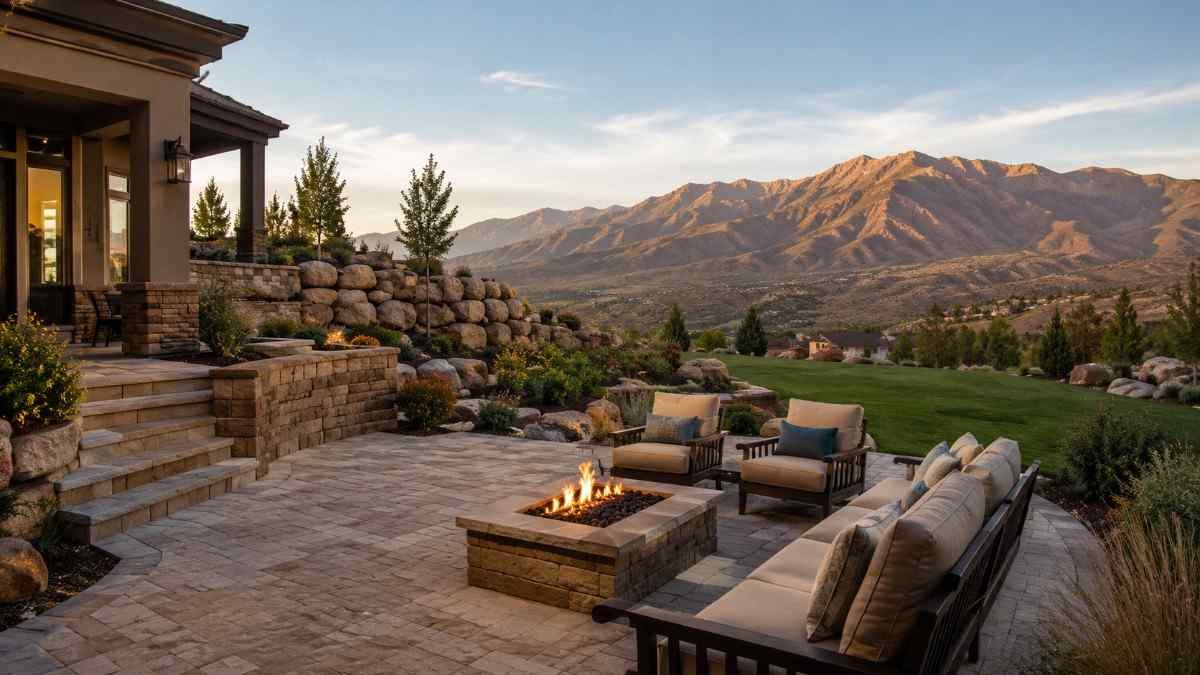
High-end Utah landscaping should create usable space, not just visual interest. That means the property needs to serve real life: entertaining, relaxing, gathering, and moving comfortably between indoors and outdoors. It also means the project should feel appropriate to the home and site, rather than imposed on them.
Luxury in this context is not excess. It is clarity. It is a space where the transitions feel natural, the materials feel intentional, and the layout supports everyday use as well as special occasions. That could mean a pergola that provides shade in the right place, a fire feature that extends seasonal use, garden shed or a pool environment that integrates seamlessly with surrounding hardscape and planting.
Cottonwood Landscaping’s full-service model is especially relevant here because premium outdoor environments often depend on coordination across specialties. Pools, masonry, planting, grading, and irrigation all influence one another. Managing those elements under one plan lowers friction and improves the final result.
A well-built outdoor living space in Utah should do three things at once:
- fit the climate
- fit the property
- fit the way the family actually lives
If one of those is missing, the landscape may still be attractive, but it will not feel complete.
The Long-Term Value Of Designing For Utah, Not Against It
The most enduring lesson in Utah landscaping is that the land should shape the design, not be treated as an obstacle to overcome. When a project respects local climate, soil conditions, and seasonal stress, it becomes more resilient, more functional, and easier to enjoy over time.
That is the strategic value of working with a team like Cottonwood Landscaping. Their experience is not simply about building more. It is about building with judgment. That includes knowing when xeriscaping is the smarter choice, when hardscaping needs additional engineering, and when the entire site needs to be rethought before details are finalized.
For homeowners in Salt Lake, Utah, and Summit Counties, the strongest projects are the ones that combine ambition with restraint. They are beautiful, but they are also grounded in how Utah properties actually perform. That is what separates a finished landscape from a lasting one.
If you are evaluating Utah landscaping solutions with Cottonwood Landscaping, the right question is not what looks impressive today. It is what will still feel elevated, usable, and structurally sound years from now. That is where the real value lives.