
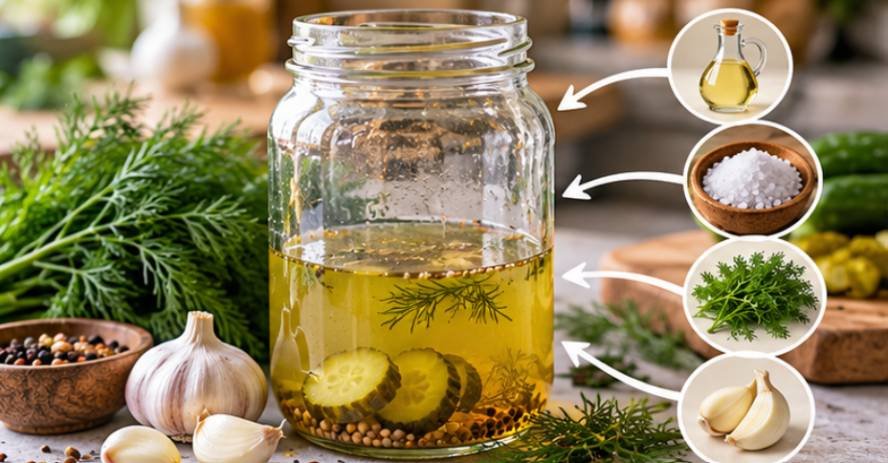
That cloudy, garlicky liquid left at the bottom of a pickle jar can do far more than preserve cucumbers. In many kitchens, it gets poured down the drain even though it already contains several ingredients cooks routinely reach for: vinegar, salt, water, herbs, garlic, and spices.
Learning how to repurpose leftover pickle juice for cooking can turn what looks like food waste into a ready-made flavor booster for chicken, potatoes, sauces, salads, and vegetables. The key is knowing where pickle brine works especially well—and where food-safety rules make reuse a bad idea.
Why Pickle Juice Works So Well in Cooking
Most commercial dill pickle brines contain an acidic base, salt, water, and seasonings. That combination gives the liquid three useful characteristics: acidity, salinity, and concentrated flavor.
Acid can brighten rich foods and balance fat. Salt seasons ingredients throughout rather than only coating their surface. Dill, garlic, mustard seed, peppercorns, and other pickle spices contribute additional flavor without requiring a crowded spice cabinet.
That makes leftover brine particularly useful for budget cooking. Instead of buying a separate bottle of vinegar or specialty marinade for one meal, you may already have an ingredient capable of doing both jobs.
There is an important distinction, however, between using pickle juice for flavor and relying on it for food preservation. The National Center for Home Food Preservation guidance on leftover pickle brine explains that vegetables absorb acid while sitting in brine, making the remaining liquid less acidic. Used brine therefore should not automatically be substituted into a home-canning recipe.
1. Turn It Into a Chicken Brine or Marinade
Chicken may be the most useful destination for leftover pickle juice.
Place boneless chicken breasts, thighs, tenders, or sandwich cutlets in enough brine to coat or submerge them, then refrigerate. A few hours is generally enough to add noticeable flavor. Strong brines can become overpowering if the meat sits too long.
The result works especially well for grilled chicken, skillet chicken, air-fryer tenders, and crispy chicken sandwiches.
Always marinate meat in the refrigerator rather than on the counter. The University of Minnesota Extension recommends refrigerating meat while it marinates and warns against reusing marinade that has contacted raw meat unless it is safely handled for an appropriate cooked use.University of Minnesota Extension marinating guidance
Cook poultry to 165°F, the minimum safe internal temperature specified by USDA. USDA food-safety temperature guidance
2. Wake Up Potato Salad
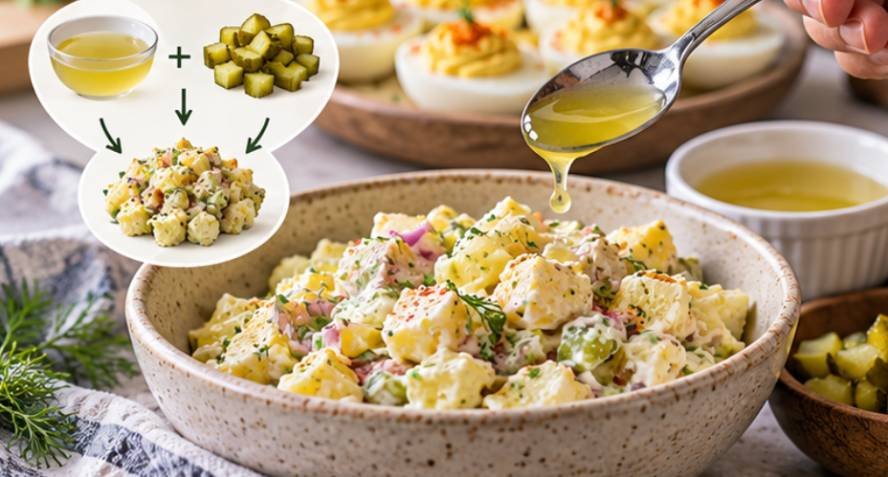
Potatoes absorb seasoning exceptionally well while they are still warm.
After draining boiled potatoes, toss them with one or two tablespoons of pickle juice before adding mayonnaise, mustard, celery, eggs, or herbs. The potatoes pick up acidity directly instead of relying entirely on the dressing.
This trick also works with smashed potatoes and warm German-style potato salads.
Start small. Pickle brine contributes salt as well as acidity, so taste the finished dish before adding additional salt.
3. Add It to Deviled Eggs and Egg Salad
Deviled egg filling needs enough acid to offset the richness of egg yolks and mayonnaise. Instead of adding only vinegar, try a teaspoon or two of dill pickle juice.
It also works in egg salad, especially when paired with mustard, chopped celery, black pepper, or fresh dill.
The result should taste brighter, not aggressively pickle-like. Add the liquid gradually because a small amount can noticeably change both flavor and consistency.
4. Build a Fast Salad Dressing
A basic vinaigrette normally needs acid, fat, and seasoning. Pickle brine already provides two of those components.
Try whisking together:
- 2 tablespoons pickle juice
- 3 tablespoons olive oil
- 1 teaspoon Dijon mustard
- A small amount of honey or sugar
- Black pepper to taste
Use it on cabbage slaw, cucumber salad, leafy greens, bean salad, or chopped vegetables.
Because different pickle brands vary dramatically in sweetness and saltiness, there is no universal ratio. Treat the recipe as a starting point and adjust after tasting.
5. Give Macaroni and Pasta Salads More Flavor
Cold pasta salads often taste flatter after refrigeration because chilled foods can seem less intensely seasoned.
A splash of pickle juice can restore some of that missing brightness. Stir a tablespoon into macaroni salad, creamy pasta salad, or a mayonnaise-based dressing before adding more salt.
For households trying to get more meals from inexpensive ingredients, this approach pairs naturally with pantry staple recipes for tight budgets, where sauces and seasonings help basic foods feel less repetitive.
6. Make a Tangy Sauce for Burgers and Sandwiches
Instead of thinning burger sauce with plain vinegar or water, add pickle brine.
Mix it into mayonnaise, mustard, ketchup, barbecue sauce, ranch-style dressing, or homemade tartar sauce. Even one teaspoon can make a creamy sauce noticeably sharper.
It is especially effective for burgers, fried chicken sandwiches, fish sandwiches, pulled pork, and fries because acidity cuts through fatty, salty flavors.
7. Use It With Pork, Beef, or Meatloaf
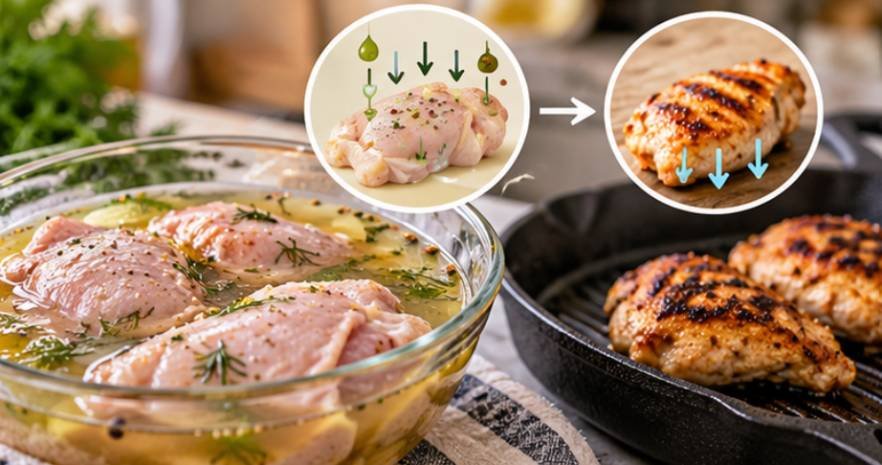
Pickle brine is not limited to chicken.
A small amount can season pork chops before cooking or be incorporated into meatloaf and burger mixtures. For beef marinades, combine it with oil, garlic, pepper, and a small amount of brown sugar if the brine is particularly sharp.
Do not assume more acid means more tenderness. Excessive marinating can alter the surface texture of meat, particularly thin cuts.
8. Make Refrigerator Vegetables—With One Important Limitation
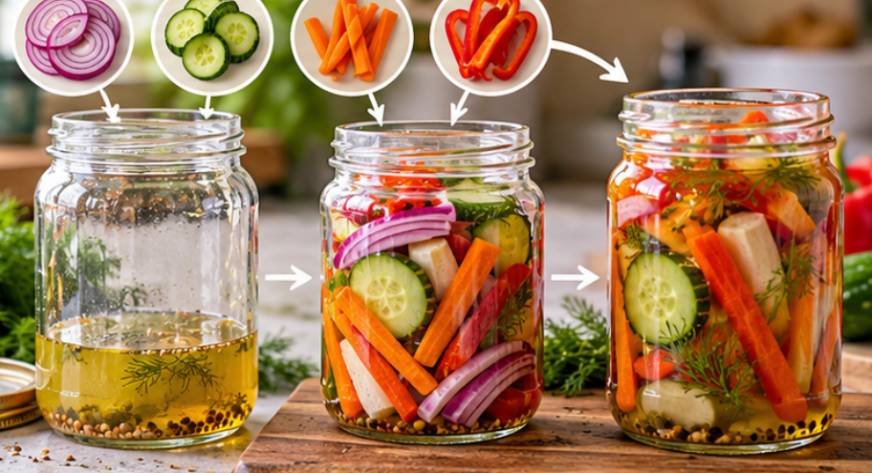
You can pour leftover pickle juice over sliced onions, carrots, radishes, peppers, or cucumbers and refrigerate them for a quick tangy garnish. But treat this as refrigerator marinating, not home canning.
University of Minnesota Extension specifically warns that brine that has already been in contact with vegetables should not be reused as though it still has its original acidity.
For actual preserved pickles, Oregon State University Extension recommends using tested recipes and vinegar containing 5% acidity rather than changing acid-to-water proportions.
Colorado State University Extension makes the same fundamental point: adequate acidity is a safety requirement, not merely a flavor preference.
9. Brighten Soups, Beans, and Braised Dishes
Rich dishes sometimes need acid more than they need additional salt or fat.
Near the end of cooking, try adding one teaspoon of pickle juice to bean soup, lentils, chili, braised cabbage, or a hearty stew. Taste before adding more.
The goal is not to make the dish taste like pickles. The acid should simply sharpen flavors that previously seemed heavy or dull.
This is also a useful trick when planning frugal freezer meals for busy weeknights. Add acidic ingredients after reheating when possible so you can adjust the flavor precisely.
A Simple Pickle-Juice Decision Test
Before pouring leftover brine into dinner, run through four questions.
Has it stayed refrigerated?
Keep opened pickle brine cold. USDA recommends maintaining refrigerators at 40°F or below because bacterial growth accelerates above that temperature.
Does it show signs of spoilage?
Discard brine with visible mold, unusual slime, or clearly abnormal odors. Never taste questionable food simply to determine whether it is safe.
Has raw meat been soaking in it?
If yes, do not return that liquid to the pickle jar or use it as an uncooked dressing or sauce.
Am I cooking or canning?
For cooking, leftover brine can be a useful flavoring ingredient. For shelf-stable canning, use a tested recipe with precisely specified acid, water, food, and salt proportions.
That distinction prevents one of the biggest misconceptions surrounding pickle-juice reuse.
Frequently Asked Questions
1. Can I reuse pickle juice more than once?
For casual refrigerated cooking uses, freshness and handling matter. Do not repeatedly reuse contaminated brine. For canning, never assume previously used pickle liquid has sufficient acidity.
2. How long should chicken sit in pickle juice?
A few hours is usually sufficient for noticeable flavor. Keep chicken refrigerated throughout marinating and cook poultry to an internal temperature of 165°F.
3. Can I substitute pickle juice for vinegar?
Yes, in many dressings, sauces, salads, and cooked dishes. Reduce added salt because pickle brine already contains sodium. Do not make the substitution in tested canning recipes.
4. Can I freeze leftover pickle juice?
Yes, small portions can be frozen for later cooking. Ice-cube trays are convenient for creating tablespoon-sized portions for sauces, soups, marinades, and dressings.
Make the Last Ingredient in the Jar Count
Once I stopped thinking of pickle juice as packaging waste and started treating it as seasoned vinegar, the possibilities became obvious. A few tablespoons can improve chicken, potato salad, sauces, eggs, vegetables, beans, and inexpensive pantry meals with almost no additional cost.
The smartest way to repurpose leftover pickle juice for cooking is not to pour it into everything. Use it where acidity and salt are already needed, taste as you go, keep food-safety boundaries clear, and never substitute used brine for properly formulated canning liquid. Sometimes the cheapest flavor enhancer in the refrigerator is the ingredient most people throw away.
Reducing food waste also means making the most of ingredients stored in your pantry. If brown sugar has hardened between baking sessions, this guide explains how to soften brown sugar in the microwave fast so you can restore its texture and use it in your next recipe.