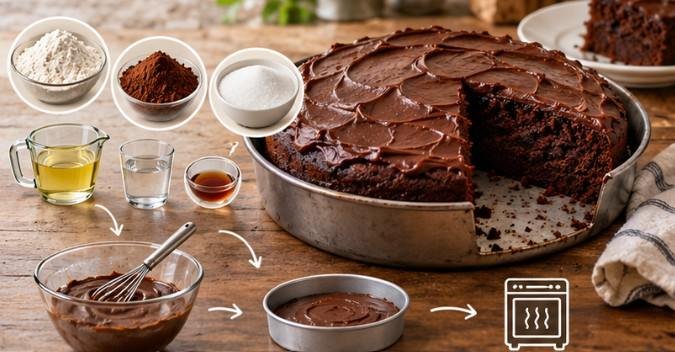
A homemade chocolate cake can be built from flour, sugar, cocoa, oil, baking soda, vinegar, and water—no eggs, butter, frosting mix, or boxed cake required. That simple formula explains why frugal baking recipes from scratch can stretch a grocery budget so effectively: the same inexpensive pantry staples can become bread, biscuits, cookies, muffins, or dessert.
That matters while grocery costs remain elevated. USDA data showed food-at-home prices in August 2026 were 2.2% higher than a year earlier, while sugar and sweets were up 6.1%. Baking at home will not make every food cheaper, but carefully chosen recipes can reduce the cost of frequently purchased breads and treats.
Why Scratch Baking Can Be So Cheap
Budget baking works best when recipes share ingredients.
Instead of buying separate mixes for cookies, biscuits, cake, and bread, I can keep flour, sugar, yeast, baking soda, cocoa, vegetable oil, salt, and vinegar in the pantry. A few dollars’ worth of ingredients can then support several baking projects.
The biggest savings usually come from avoiding recipes dependent on large amounts of butter, specialty chocolate, nuts, cream cheese, or several eggs.
Ingredient substitutions also help. Utah State University Extension notes that ordinary kitchen ingredients can replace missing baking staples, although the final flavor or texture may change. For example, baking powder can sometimes be replaced with baking soda plus an acidic ingredient such as vinegar or lemon juice.
Here are four reliable starting points.
1. Pantry Chocolate Cake Without Eggs or Dairy
This Depression-era style cake—often called wacky cake—is one of the clearest examples of cheap scratch baking.
Ingredients
Use:
1½ cups all-purpose flour
1 cup sugar
3 tablespoons unsweetened cocoa
1 teaspoon baking soda
½ teaspoon salt
1 cup warm water or coffee
⅓ cup vegetable oil
1 tablespoon vinegar
1 teaspoon vanilla
Heat the oven to 350°F.
Mix the dry ingredients, add the liquids, and stir only until the batter looks smooth. Pour it into a greased 8- or 9-inch pan and bake for roughly 25–30 minutes.
The clever part is the chemistry. Baking soda needs an acid to produce carbon dioxide, which helps the cake rise. Vinegar supplies that acidity without making the finished cake taste like vinegar.
The recipe also avoids two ingredients that can increase baking costs: eggs and butter.
2. Three-Ingredient Peanut Butter Cookies
Some frugal recipes win because they require fewer ingredients rather than cheaper ingredients.
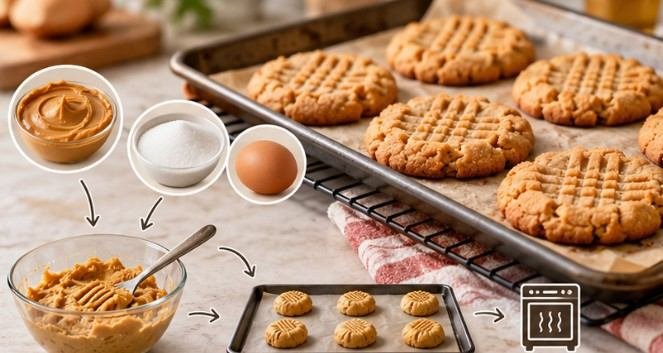
Combine:
1 cup peanut butter
1 cup sugar
1 large egg
Mix until a thick dough forms. Roll into small balls, place them on a baking sheet, and flatten each with a fork.
Bake at 350°F for about 10–12 minutes.
These cookies are naturally flourless, require no butter, and dirty only one mixing bowl. They make particular sense when peanut butter is already a household staple.
The limitation is obvious: peanut butter itself is not always inexpensive. Compare its unit price before assuming this recipe beats ordinary sugar cookies.
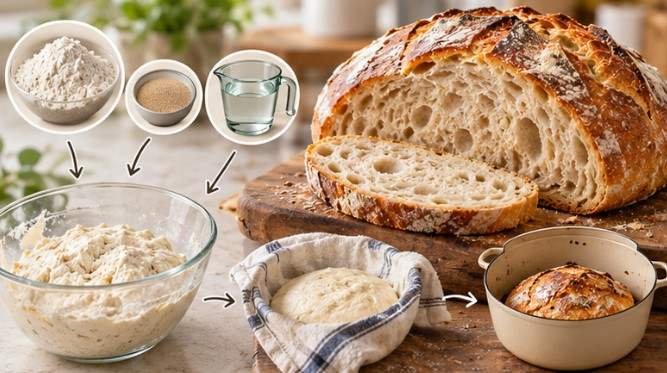
3. No-Knead Bread for Everyday Meals
Bread is where scratch baking can move beyond dessert and affect the weekly food budget.
A basic batch uses approximately:
3 cups warm water
1½ tablespoons yeast
1½ tablespoons salt
6½ cups all-purpose flour
Mix everything until no dry flour remains. The dough should look wetter and rougher than traditional kneaded bread.
Let it rise for about two hours. Refrigerate the dough afterward, then remove portions as needed. Shape each portion into a loaf, let it rest, and bake in a thoroughly heated oven.
No-knead dough is useful because one preparation session can supply several loaves.
Leftover homemade bread also does not need to become waste. The EPA recommends freezing bread that will not be eaten in time and repurposing stale bread into foods such as French toast or croutons. The agency estimates a typical family of four spends almost $3,000 annually on food that ultimately goes uneaten.
That turns food-waste prevention into part of the savings strategy.
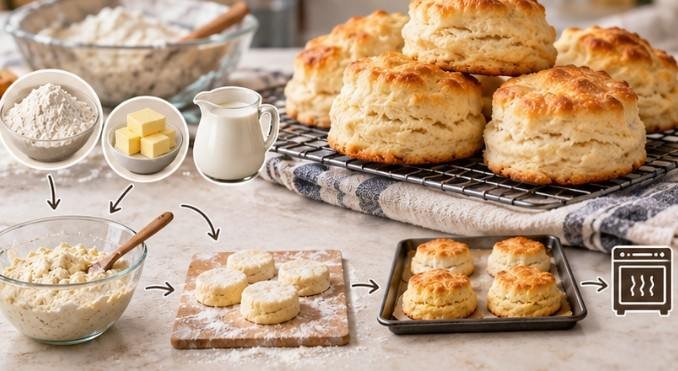
4. Two-Ingredient Biscuits for Fast Meals
Biscuits do not require an expensive refrigerated tube.
For an extremely simple version, combine approximately:
2 cups self-rising flour
1 cup heavy cream
Stir just until a soft dough forms. Pat it gently rather than aggressively kneading it, cut into rounds, and bake at 425°F until golden, usually around 12–15 minutes.
Heavy cream may not always be the cheapest option, however. If you already have milk and another suitable fat available, a traditional biscuit recipe may cost less.
That highlights an important rule: the cheapest recipe is usually the one that makes intelligent use of ingredients you already own.
Use Substitutions Before Making Another Grocery Run
Discovering that a recipe calls for one missing ingredient often leads to an unnecessary store trip. Instead, check whether a substitution works.
Penn State Extension lists several practical options, including using oil for melted butter and substituting some fruit purees in certain baked recipes.
The American Heart Association also notes that pureed fruits and vegetables can replace oil in some muffins, cakes, cookies, and snack bars.
Substitutions are not universally interchangeable, though. Butter affects flavor, browning, spread, tenderness, and structure. Replacing it in a delicate shortbread recipe is very different from replacing part of the fat in banana muffins.
Use swaps most aggressively in forgiving recipes such as quick breads, muffins, snack cakes, pancakes, and some cookies.
My Five-Step Frugal Baking Test
Before baking, I run through a simple cost check.
1. Count specialty ingredients
Recipes requiring several ingredients that serve no other purpose in your kitchen are rarely budget champions.
2. Check what needs using up
Overripe bananas can become banana bread. Soft apples can become applesauce. Leftover oatmeal can enter muffins or bread.
3. Calculate cost per serving
A $4 loaf producing 12 servings costs about 33 cents per serving. A $3 cake producing nine portions costs about 33 cents each.
4. Compare the finished product honestly
A homemade artisan loaf should be compared with bakery-style bread, not necessarily the cheapest supermarket sandwich loaf.
5. Freeze the surplus
Savings disappear when half the batch goes stale. This same planning mindset can stretch the rest of a household budget too. Families facing major financial changes may find it useful to plan ahead for moving expenses on a low income rather than allowing several unexpected costs to arrive together.
Don’t Let Cheap Ingredients Ruin Good Baking
Saving money does not mean ignoring technique.
Measure flour carefully. Too much flour produces dry cookies and dense bread. Avoid overmixing muffins and biscuits because excessive mixing develops more gluten and can make them tough.
Your location can matter as well. Colorado State University Extension explains that baking at higher elevations may require changes to liquid, flour, sugar, leavening, temperature, or proofing because lower atmospheric pressure affects baked goods.
So if a reliable budget recipe repeatedly collapses in Denver but works perfectly at sea level, the recipe may not actually be the problem.
Build Meals Around What You Bake
Homemade bread becomes more economical when it plays several roles: breakfast toast, sandwich bread, soup accompaniment, garlic bread, breadcrumbs, or French toast.
Biscuits can accompany eggs one morning and soup the next night. That approach works especially well alongside inexpensive batch cooking. These cheap crock-pot meals can pair naturally with homemade bread or biscuits, helping one inexpensive baking session support several meals.
Frequently Asked Questions
1. Are frugal baking recipes from scratch always cheaper than boxed mixes?
No. Sales and store brands can sometimes beat homemade costs. Scratch baking usually becomes more economical when you already stock versatile basics and bake regularly.
2. What are the cheapest ingredients to keep for baking?
All-purpose flour, sugar, vegetable oil, baking soda, yeast, salt, vinegar, cocoa powder, oats, and basic spices cover a surprisingly wide range of recipes.
3. Can I replace butter with oil in baking?
Sometimes. Oil works particularly well in muffins and quick breads, but cookies and pastries may change significantly because butter affects flavor, texture, and spreading.
4. How do I make homemade baked goods last longer?
Cool them completely, store them airtight, and freeze portions you will not eat soon. Proper freezing is especially useful for bread, muffins, biscuits, and unfrosted cakes.
Make the Oven Earn Its Keep
Scratch baking saves the most money when it stops being a collection of isolated recipes and becomes a system. Flour bought for bread can make biscuits. Cocoa bought for cake can flavor muffins. Aging fruit can become quick bread instead of trash.
Start with one recipe you normally buy ready-made, calculate what your homemade batch actually costs, and save the result if it works. Over time, those dependable formulas become more valuable than a cupboard filled with specialty ingredients.
The simplest baking pantry is often the most productive one: inexpensive ingredients, flexible recipes, very little waste, and an oven that earns the energy it uses.