
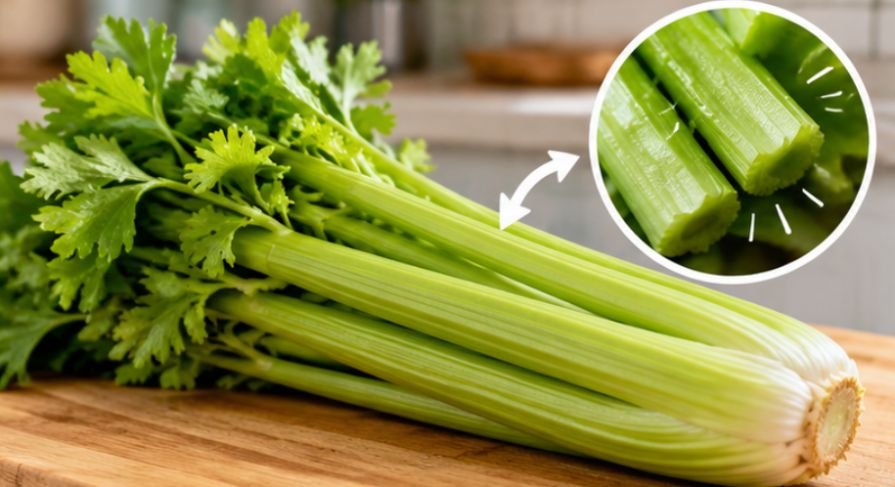
Celery can lose its snap long before it actually spoils. The reason is surprisingly simple: those crunchy stalks contain a great deal of water, and once they begin losing moisture, their firm structure turns flexible.
That means the best way to store celery so it stays crisp is to keep it cold while limiting moisture loss. For whole bunches, wrapping celery before placing it in a refrigerator crisper works especially well. For celery sticks, storing them in cold water can restore and maintain crunch. The trick is choosing the right method for how you plan to use it.
Why Celery Turns Limp So Quickly
Fresh celery stays rigid because its plant cells are filled with water. As water gradually escapes after harvest, pressure inside those cells falls and the stalk begins bending instead of snapping. Commercial storage research shows just how much temperature and humidity matter.
The UC Davis Postharvest Research and Extension Center identifies approximately 32°F and 98–100% relative humidity as ideal celery storage conditions. Under carefully controlled commercial conditions, good quality may be maintained for five to seven weeks.
Home refrigerators obviously don’t operate like commercial produce warehouses. The University of Minnesota Extension notes that a typical refrigerator is cold but relatively dry, often around 40°F with 50–60% relative humidity. Packaging vegetables helps create a more humid microenvironment around them. That’s why leaving celery completely uncovered usually produces disappointing results.
The Best Method for a Whole Bunch of Celery
If I buy celery intending to use it gradually in soups, snacks, salads, and weeknight dinners, I prefer keeping the bunch intact rather than chopping everything immediately.
Planning how to use every stalk helps minimize food waste, especially when adding celery to soups, casseroles, stir-fries, and frugal family meals on a budget.
1. Inspect the celery first
Remove damaged, slimy, yellowing, or badly bruised portions. Utah State University recommends choosing celery with fresh leaves, firm stalks, and no obvious wilting or discoloration. Fresh stalks should feel relatively heavy and firm rather than loose and bendable.
Starting with good celery matters. No storage trick can turn deteriorating produce into a fresh bunch for several weeks.
2. Don’t wash it until you’re ready to use it
Extra surface moisture can encourage deterioration during storage. USDA-supported guidance recommends waiting to wash many fruits and vegetables until shortly before use. If produce is washed before storage, it should be dried thoroughly first.
3. Wrap the bunch
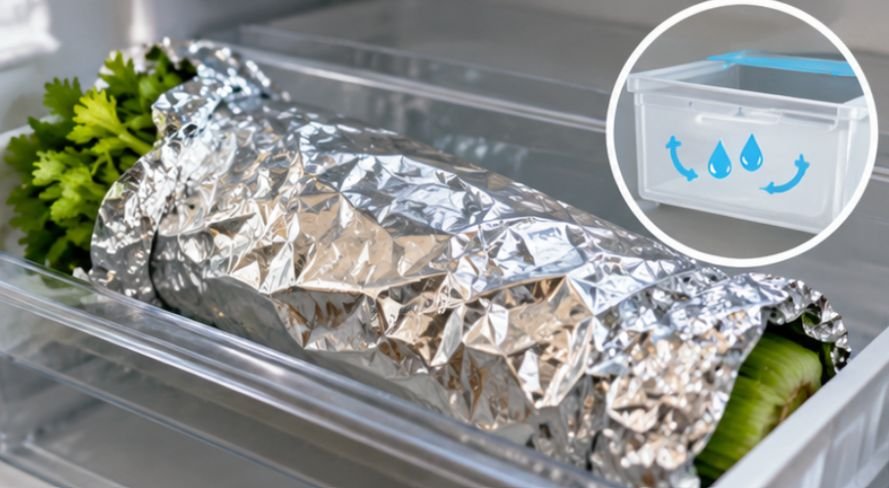
A popular home-storage technique is wrapping the celery loosely in aluminum foil rather than keeping it tightly sealed inside its original produce sleeve.
The goal isn’t to make an airtight package. It is to reduce moisture loss while avoiding excessive trapped condensation.
Foil works conveniently because it can be opened, rewrapped, and shaped around the stalks. A produce bag can work too. In fact, Utah State University Extension recommends storing celery in a plastic bag in the refrigerator’s vegetable crisper. The bigger principle is controlling dehydration, not treating aluminum foil as magic.
4. Use the crisper drawer
Vegetables generally benefit from higher humidity than many fruits. USDA guidance explains that sealed crisper drawers provide a more suitable storage environment for fruits and vegetables, with vegetables generally requiring higher humidity conditions.
Keep the refrigerator at 40°F or colder for food safety. The USDA’s fresh-produce storage guidance also emphasizes proper refrigeration and separation of produce according to storage characteristics.
What About Celery Sticks? Use Water Instead
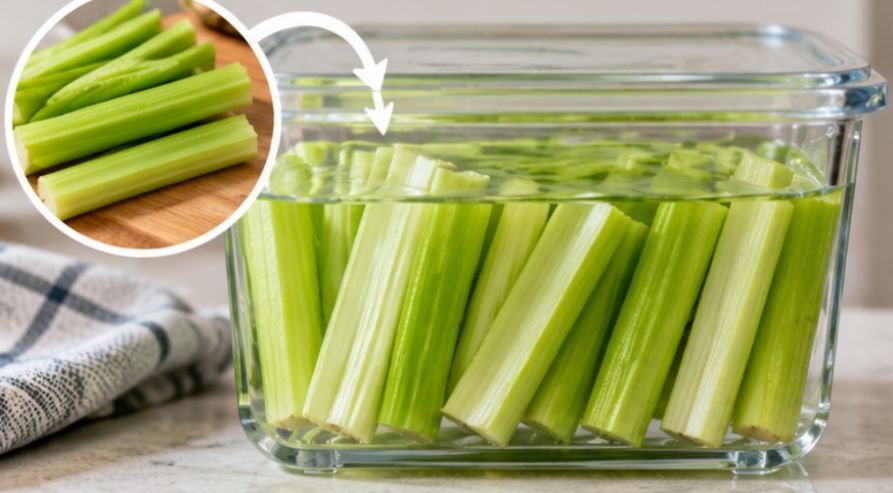
The best way to store celery so it stays crisp changes once you’ve already cut it.
Cutting creates exposed surfaces that lose moisture more easily. UC Davis also notes that cutting celery makes it more susceptible to bacterial decay, another reason temperature and cleanliness become especially important.
For snack-ready sticks:
- Wash the celery under cool running water.
- Cut it into the sizes you normally eat.
- Place the sticks in a clean food-storage container.
- Cover them with cold water.
- Close the container and refrigerate it.
- Replace the water regularly if you’re keeping them for more than a couple of days.
Keep cut produce refrigerated rather than leaving it on the counter. The Academy of Nutrition and Dietetics advises refrigerating peeled, chopped, or sliced produce within two hours.
Precut celery can also make inexpensive snacks easier to grab, particularly alongside ideas such as these frugal toddler snacks under 50 cents.
Foil, Plastic, or Water: Which Should You Choose?
Use this simple decision test:
Whole bunch you want to keep for multiple meals: wrap it and place it in the crisper.
Celery you’ll eat within several days: a produce bag in the crisper is perfectly reasonable.
Precut snack sticks: refrigerate them in a covered container, with cold water if maintaining maximum crunch is the priority.
Celery already becoming limp: rehydrate it before deciding that it belongs in the trash.
How to Make Limp Celery Crisp Again
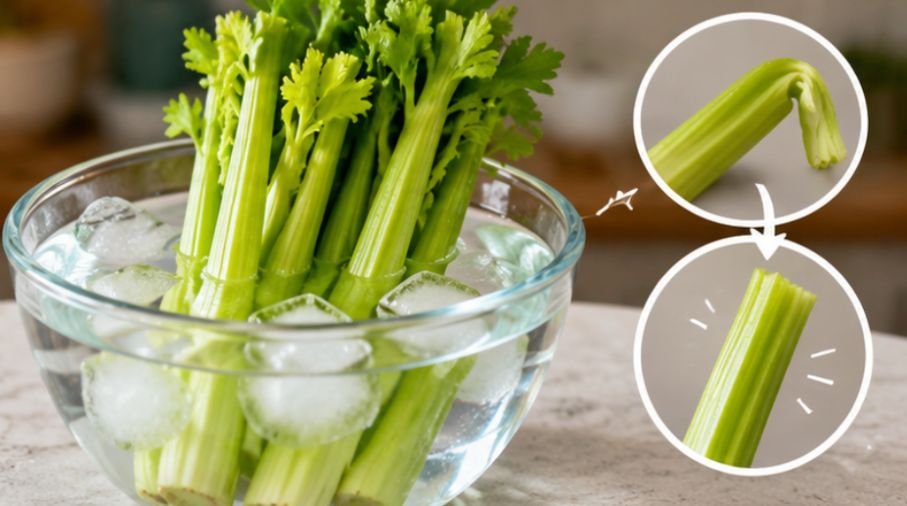
A bendable stalk isn’t automatically spoiled.
Trim a small amount from the bottom of the celery and place the stalks in very cold water. For faster results, use ice water. Refrigerate them while they soak.
As the stalks absorb water, their cells regain some internal pressure and the celery can become noticeably firmer.
Give it roughly 30 minutes and check the texture. Particularly dehydrated stalks may need longer.
Even celery that has lost some of its crunch can still be useful in cooked dishes, including affordable recipes like cheap meals using canned beans and rice, where chopped vegetables add flavor without significantly increasing costs.
However, water cannot reverse actual spoilage.
Discard celery that has developed slime, obvious mold, severe discoloration, or an unpleasant odor. USDA guidance identifies mold and significant deterioration as signs that produce may have spoiled.
One Storage Mistake I Would Avoid: Freezing Celery for Raw Snacks
Freezing sounds like the ultimate way to stretch a grocery purchase, but it isn’t ideal if crunch is the goal.
Celery has a high water content. When that water freezes, ice crystals damage the vegetable’s cell structure. USDA produce-preservation guidance explains that high-moisture vegetables such as celery become considerably softer after thawing.
Frozen celery is still useful for cooked dishes.
Chop it first, freeze portions, and later add them directly to soups, stews, sauces, or casseroles where crisp texture doesn’t matter.
Frequently Asked Questions
1. How long does celery stay crisp in the refrigerator?
Properly refrigerated whole celery commonly keeps good quality for one to two weeks at home, although exceptionally fresh celery stored under favorable conditions may remain usable longer.
2. Is aluminum foil better than plastic for celery?
Both can reduce moisture loss. Foil is a convenient popular method, while university guidance also supports storing celery in a plastic bag inside the vegetable crisper.
3. Should celery be washed before storing?
Usually, wash it shortly before use. If you wash celery before refrigeration, dry it thoroughly because excess surface moisture can accelerate deterioration.
4. Can you make soft celery crunchy again?
Often, yes. Trim the bottom and soak the stalks in cold or ice water. Rehydration can restore firmness, provided the celery is dehydrated rather than spoiled.
Final Thoughts
The best way to store celery so it stays crisp isn’t complicated: protect it from moisture loss, keep it properly refrigerated, and avoid cutting more than you need. Whole celery does well wrapped in the crisper, while precut sticks can benefit from cold-water storage.
Most importantly, don’t automatically throw away celery simply because a stalk bends. A short soak in ice water may bring back much of its original snap.
Treat crispness as a moisture-management problem rather than an expiration clock, and one inexpensive bunch can stay useful through far more meals.