More than 18 million U.S. households experienced food insecurity in 2024, according to the USDA. That means running short on groceries is not an unusual budgeting failure; it is a problem millions of households encounter when money and food simply do not line up.
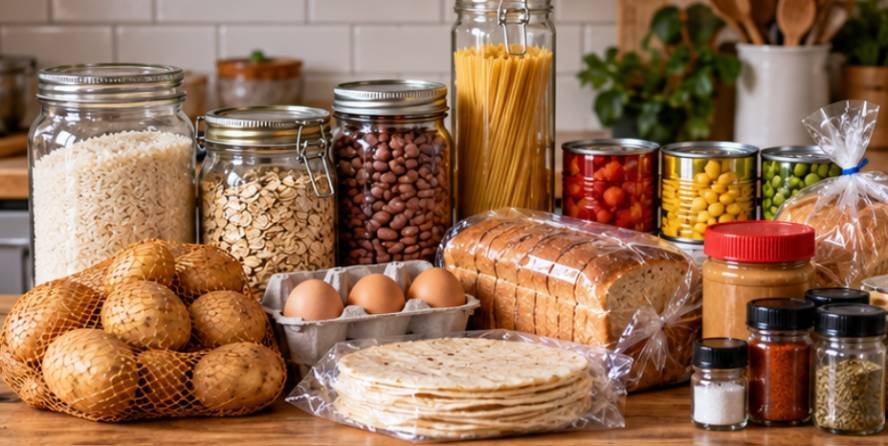
If you are wondering what to cook when you have no money for groceries, forget elaborate recipes for the moment. Your most useful ingredients are probably already hiding in a cabinet, freezer, or refrigerator: rice, pasta, potatoes, beans, eggs, tortillas, oats, canned vegetables, bread, or even half-used condiments.
The goal is to turn those scraps and staples into enough food to get through the next few days without wasting what you already own.
First, Stop Thinking in Recipes
A nearly empty kitchen can look more discouraging than it really is because most of us think in complete recipes.
A recipe might ask for eight ingredients. You have four.
Instead, build meals using three simple components:
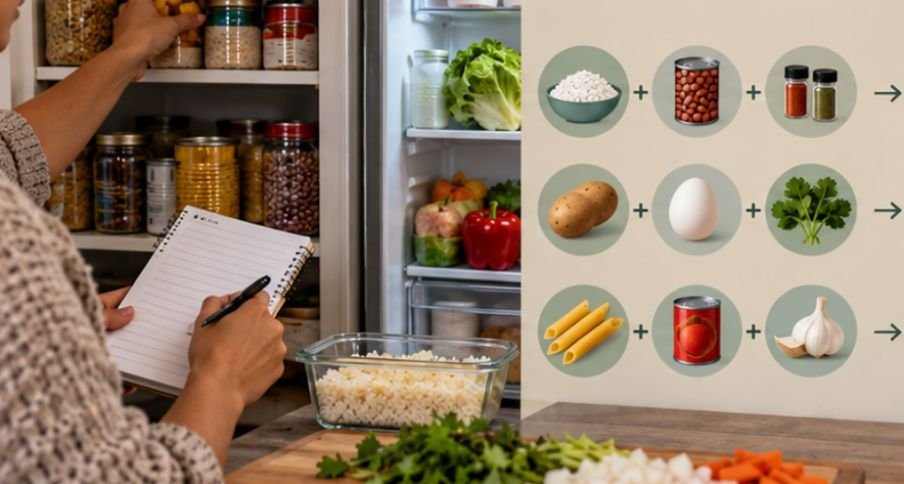
Base + protein + flavor
Your base might be rice, pasta, potatoes, oats, bread, or tortillas.
Protein can come from beans, lentils, eggs, peanut butter, canned tuna, leftover meat, or cheese.
Flavor can be as simple as salt, pepper, soy sauce, salsa, garlic powder, hot sauce, bouillon, mustard, or a spoonful of tomato paste.
Utah State University Extension similarly recommends inexpensive staples including beans, lentils, eggs, oats, rice, pasta, potatoes, and frozen vegetables as flexible foods for budget-conscious households.
That framework can produce surprisingly satisfying meals from a kitchen that initially appears empty.
Take a 10-Minute Kitchen Inventory
Before spending your last few dollars, check four places:
- Pantry and cabinets
- Refrigerator
- Freezer
- Condiment and spice shelves
Write down everything that could become part of a meal, including small quantities. A half bag of frozen peas matters. So does one potato, two eggs, three tortillas, a quarter box of pasta, or leftover rice.
University of Minnesota Extension recommends inventorying cupboards and freezers before shopping because households often have more usable staple foods than they realize.
Then organize your inventory into starches, proteins, vegetables and flavorings. You can usually see possible meals immediately.
Seven Cheap Meals Made From Basic Pantry Foods
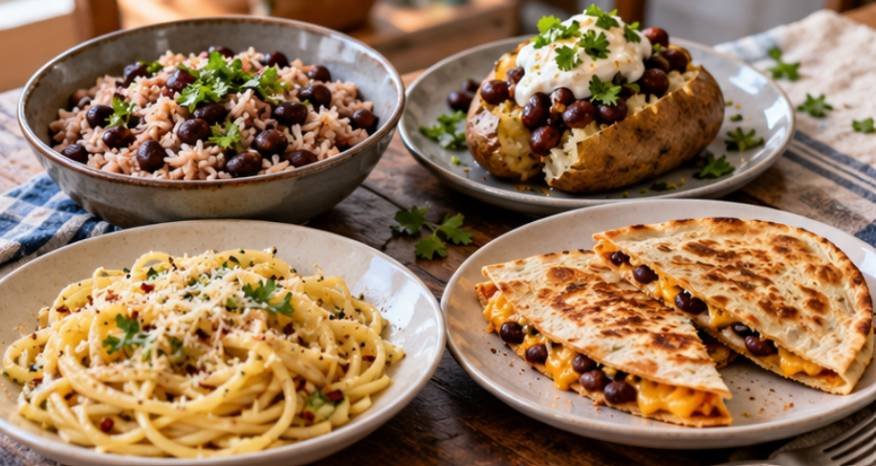
Rice and Beans
Few combinations stretch as effectively as rice and beans.
Cook whatever rice you have and combine it with canned or cooked dry beans. Salt and pepper work, but cumin, chili powder, salsa, hot sauce, garlic, or leftover taco seasoning can make it considerably better.
If you have cheese, frozen corn, an egg, or leftover vegetables, add them.
Beans are particularly useful because USDA dietary guidance recognizes beans, peas, and lentils as protein foods as well as vegetables.
Loaded Potatoes Without the Expensive Toppings
Bake, boil, microwave, or dice potatoes into a skillet.
Then use whatever topping is available: scrambled egg, beans, canned chili, cheese, frozen broccoli, leftover vegetables, butter, sour cream, or simply seasonings.
A potato does not need bacon and specialty cheese to become dinner.
Pantry Pasta
Plain pasta becomes much better with even one flavorful ingredient.
Try oil or butter with garlic powder and pepper. A spoonful of tomato paste can become a quick sauce when loosened with pasta water. Canned tomatoes, Parmesan, frozen vegetables, beans, or red pepper flakes are all useful additions.
Save a little pasta water before draining. Its starch helps thin and bind improvised sauces.
Egg Toast or Breakfast Burritos
Eggs make small quantities of other ingredients feel like a meal.
Put a fried or scrambled egg over toast, rice, potatoes, or tortillas. Add salsa, beans, cheese, onions, or leftover vegetables if available.
Breakfast for dinner is especially useful when the refrigerator is almost empty.
Clean-Out-the-Fridge Fried Rice
Cold leftover rice is ideal. Heat it in a skillet with a little oil. Add frozen vegetables, canned corn, peas, chopped leftovers, or an egg. Season with soy sauce if you have it. The important principle is not authenticity. It is turning several small leftovers into one coherent meal.
Bean or Cheese Quesadillas
A tortilla plus a modest amount of cheese makes a filling starting point.
No cheese? Mash seasoned beans onto the tortilla instead. Rice, leftover chicken, potatoes, scrambled egg, corn, or vegetables can stretch the filling.
Cook it in a dry skillet until the tortilla becomes crisp.
Emergency Soup
Soup is one of the easiest ways to make limited ingredients feed more people.
Start with water, broth, bouillon, canned tomatoes, or leftover cooking liquid. Add potatoes, beans, rice, pasta, frozen vegetables, lentils, canned meat, or leftovers. Season aggressively enough that it tastes intentional rather than watered down.
For future weeks when you have a little more room in your budget, these frugal slow cooker meals can also turn inexpensive staples into several servings with minimal hands-on cooking.
The “Two-Day Bridge” Method
If payday or other income is only a few days away, don’t try to create seven completely different dinners.
Make one large base and reuse it.
For example:
Day one: rice and beans
Day two lunch: bean-and-rice burritos
Day two dinner: fried rice with an egg and vegetables
Or cook several potatoes at once:
Meal one: baked potatoes and beans
Meal two: potato-and-egg skillet
Meal three: potato soup
This reduces both food waste and cooking fuel while preventing the last usable ingredients from disappearing into unrelated meals.
When you have a little more time to prepare ahead, these frugal freezer meals for busy weeknights offer practical ways to portion leftovers, preserve extra servings, and keep future dinners ready without spending more on groceries.
If You Have $5 to $10 Left, Buy Ingredients That Complete Meals
When cash is extremely limited, avoid buying foods that cannot connect with what is already at home.
Suppose you have rice but no protein. Beans or eggs may unlock several meals.
Have pasta but no sauce? Canned tomatoes or tomato paste may be more useful than another box of pasta.
Before shopping, ask:
What one purchase makes the greatest number of ingredients I already own usable?
That question is often more valuable than simply buying whichever product has the lowest sticker price.
You can also use digital grocery coupons when they reduce the cost of something already on your list. A coupon is not savings if it persuades you to buy something you did not need.
When Stretching the Pantry Is No Longer Enough
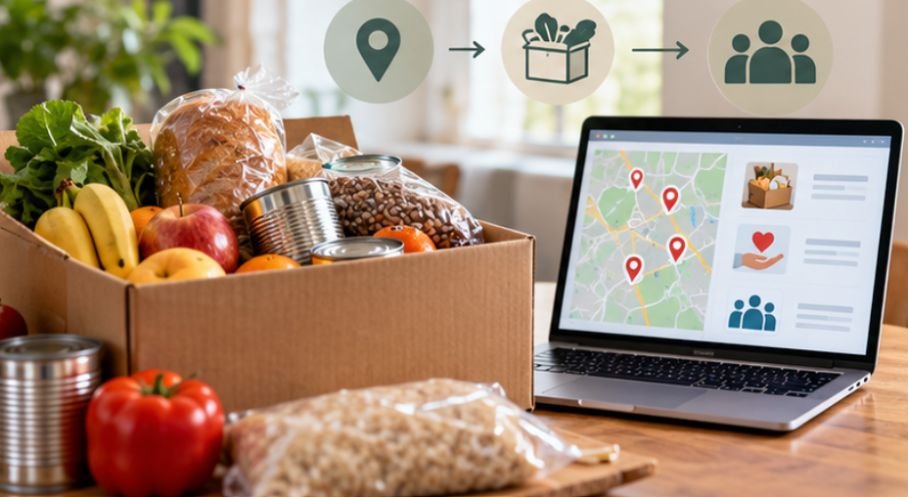
There is an important limit to frugal cooking advice: you cannot creatively cook food that simply is not there.
USDA data show that 5.4% of U.S. households experienced very low food security in 2024, meaning eating patterns were disrupted and food intake was reduced because resources were insufficient.
If you are out of food, use assistance rather than trying to survive indefinitely on tiny portions.
USAGov’s emergency food assistance page lists immediate food-help options, including local pantries, community organizations and federal assistance. You can also call 211; United Way’s 211 network connects people with food pantries, meal programs and other local resources.
Feeding America’s food bank locator lets you search by ZIP code for nearby food banks and partner pantries. Feeding America notes that anyone needing help affording food can seek assistance, although individual programs may have local eligibility requirements.
If low income is an ongoing problem, look into SNAP rather than relying solely on emergency food boxes. USAGov explains how to apply for SNAP through your state or local office. Some households meeting expedited-service criteria can receive SNAP benefits within seven days.
These programs exist for exactly this situation.
Frequently Asked Questions
1. What can I cook if I literally have almost no food?
Start with any starch you have—rice, pasta, potatoes, bread or oats—and combine it with beans, eggs, peanut butter, vegetables or seasonings. If there is truly no food, contact a local food pantry or 211.
2. What are the cheapest foods for making several meals?
Rice, dry beans, lentils, potatoes, oats, pasta, eggs and peanut butter are among the most versatile choices because they can become multiple breakfasts, lunches and dinners.
3. Can I get free food without receiving SNAP?
Yes. Food banks, community pantries, soup kitchens, churches and community meal programs may provide food independently of SNAP. Eligibility rules vary by organization and location.
4. How can I make pantry food taste better?
Use concentrated flavor: garlic powder, bouillon, salsa, soy sauce, mustard, tomato paste, chili powder, hot sauce, vinegar or dried herbs. Even one strong seasoning can transform inexpensive staples.
Make the Food You Have Do One More Job
Figuring out what to cook when you have no money for groceries is less about discovering a magical ultra-cheap recipe and more about seeing your kitchen differently.
Inventory first. Choose a starch. Add whatever protein is available. Use vegetables before they spoil. Add enough seasoning to make the meal enjoyable, then deliberately turn leftovers into tomorrow’s food.
And if the cupboards really are empty, move beyond recipe hunting and use emergency food resources. Stretching groceries is smart; going hungry because you think you should solve the problem alone is not.
Sometimes the best budget meal starts with rice and beans. Sometimes it starts by asking for a box of groceries.