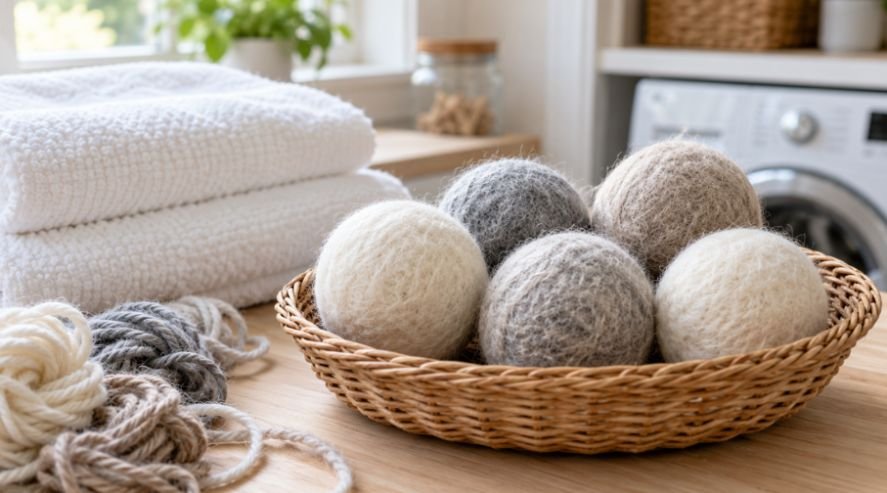
Throwing away residual skeins of wool yarn always felt wasteful to me. Two years ago, I stared at a basket overflowing with leftover worsted strands and decided to overhaul my entire laundry routine. Learning how to make wool dryer balls from scrap yarn transformed those unusable fragments into high-performance laundry workhorses that soften heavy towels, eradicate static cling, and cut machine cycle times by roughly 25 percent.
Most store-bought alternatives cost fifteen to twenty dollars for a set of three. You can make six of them tonight for zero extra dollars while eliminating petroleum-based dryer sheets from your home waste stream. Commercial laundry sheets coat everyday garments in quats (quaternary ammonium compounds) and artificial perfumes.
According to peer-reviewed research compiled by the National Center for Biotechnology Information, commercial dryer sheets emit dozens of volatile organic compounds through dryer vents. Replacing them with unadulterated sheep fiber keeps your indoor air clean and gives purpose to leftover crafting scraps.
The Raw Fiber Dilemma: Untreated Wool vs. Superwash Blends
Before winding a single yard of thread around your fingers, you must inspect the chemical makeup of your scrap pile. I learned this the hard way during my first attempt when half my balls completely dissolved into a stringy bird’s nest inside my washer. Only 100 percent natural, untreated animal wool will undergo the physical process of felting.
[Untreated Wool] [Superwash Wool]
Directional Scale Barbs Acid-Stripped or Polymer-Coated
(Interlocks Under Agitation) (Scales Cannot Mesh Together)
\\\\\\\\\\\\\\\\\\\\\\ ═════════════════════════
////////////////////// ═════════════════════════
Result: Tight Felt Result: Total Fray
The Microscopic Mechanics of Fiber Felting
Natural sheep wool fibers have microscopic, overlapping cuticular scales that point in a single direction. As documented in research published by the Textile Research Journal, when natural keratin fibers experience moisture, heat, and vigorous mechanical agitation, these directional scales expand and catch against one another like microscopic ratchet gears. They pull tighter and tighter until they fuse into a permanent, dense fabric sheet.
Superwash wool behaves completely differently. Manufacturers treat superwash wool through chlorine-based acid baths that strip away the cuticular scales, or they coat the yarn in a synthetic polyamide resin, a process detailed in industrial reports by the American Chemical Society. This treatment prevents garments from shrinking in modern washing machines, but it also completely sabotages your dryer balls. Synthetic blends containing acrylic, nylon, polyester, or plant-derived cotton will never felt.
The Two-Minute Palm Friction Test
If your yarn scraps lack original factory labels, run this quick diagnostic test before assembling your cores. Snip two four-inch strands of yarn. Fray the ends with your fingers until the raw fiber wisps out. Wet your palms with hot tap water and a pinpoint drop of dish soap. Clamp the overlapping frayed strands tightly between your palms and rub them back and forth with firm pressure for thirty seconds.
If the strands mesh into a solid, unbreakable bond that you cannot pull apart, you have pure untreated wool.
If the fibers slip smoothly past each other and remain distinct individual threads, set those scraps aside for other upcycling projects, such as making DIY reusable Swiffer wet pads from old towels.
Essential Tools and Materials from Your Scrap Basket
Gather these basic household items before sitting down to wind your yarn:
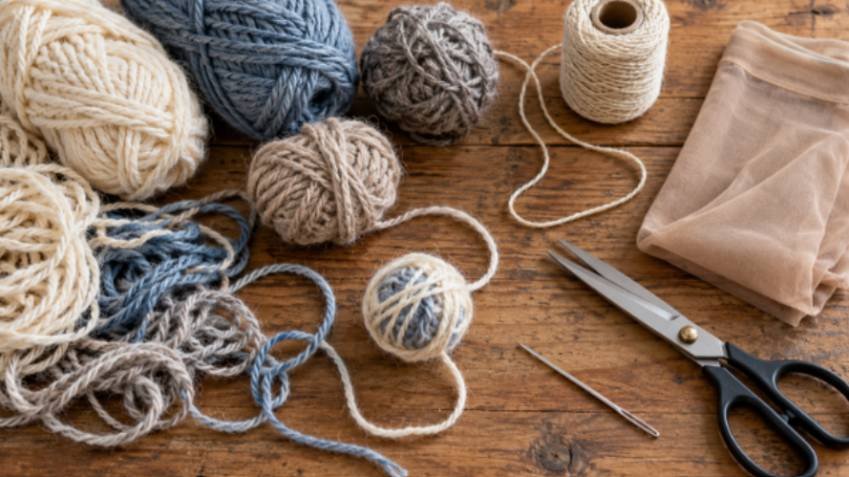
- 100% Untreated Wool Scrap Yarn: You need roughly 2.5 to 3.5 ounces (70–100 grams) of fiber per completed dryer ball.
- Old Sheer Pantyhose or Knee-High Stockings: These compress the exterior strands during machine agitation.
- Cotton Twine or Scrap Acrylic Yarn: Use non-felting string to knot off individual stocking compartments. Never tie off sections with wool, or the balls will fuse straight to the stocking mesh.
- Tapestry Needle or Small Crochet Hook: A blunt-tipped steel needle secures loose yarn tails deep into the center core.
- Sharp Fabric Shears: Clean cuts keep your tails from fraying out of place.
If you are looking for simple ways to repurpose discarded craft room textiles after this, consider building a [draft stopper for winter doors dollar tree] project using heavier denim and fleece remnants.
Keeping leftover yarn, fabric remnants, and other crafting supplies neatly organized can also make future upcycling projects easier. Explore these DIY storage solution ideas for practical ways to organize your craft space.
Step-by-Step: How to Make Wool Dryer Balls from Scrap Yarn
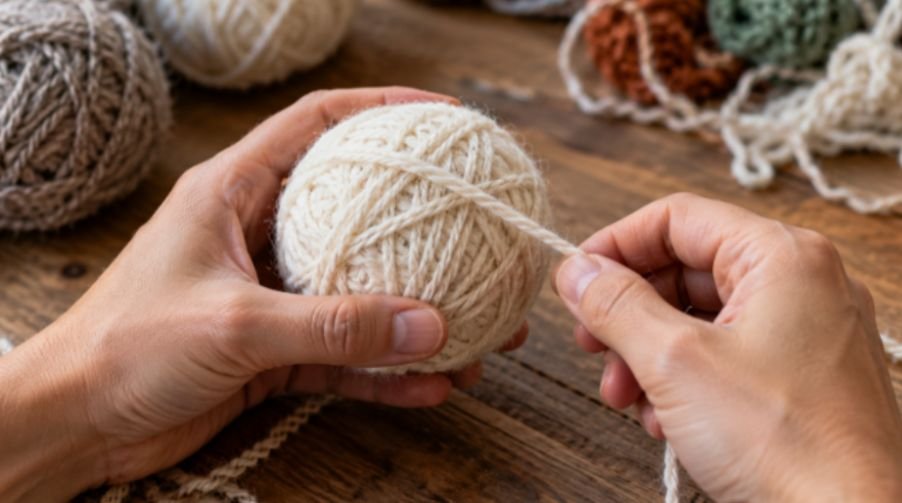
Creating durable dryer balls requires strict tension. If you wrap your yarn loosely, the interior core remains hollow, causing the ball to collapse into an irregular, lumpy oval after five loads of laundry.
+————————————————————————–+
| BALL DENSITY & SIZING MATRIX |
+———————-+——————–+——————————+
| Construction Stage | Target Diameter | Expected Texture / Density |
+———————-+——————–+——————————+
| Raw Wounded Core | 3.25–3.50 inches | Firm, slight surface bounce |
| Post-Wash Cycle 1 | 2.85–3.00 inches | Tightened outer shell layer |
| Final Post-Dry Stage | 2.50–2.75 inches | Solid, rock-hard felt sphere |
+———————-+——————–+——————————+
Step 1: Building a Dense, Non-Shifting Core
Spread your index and middle fingers slightly apart. Wrap your lead yarn around both fingers twenty to twenty-five times to form a small, flat loop cluster. Gently slide the loops off your fingers. Take the working yarn and wrap it crosswise around the exact middle of the loops ten times, cinching the bundle into a tight bow-tie shape.
Fold the two outer loop ends into the center so they touch. Begin wrapping your yarn firmly around this folded bundle, turning the core in your fingers with every three to four passes. Maintain steady, firm tension without stretching the yarn to its absolute snapping point.
Step 2: Cross-Hatch Winding to Baseball Dimensions
A common beginner mistake is winding round-and-round in one continuous equatorial track. This creates a lemon-shaped egg that thumps loudly against your dryer drum.
Rotate the sphere ninety degrees every few seconds. Crisscross your strands diagonally across the polar points of the sphere. As you add volume, you can splice in different yarn weights or assorted colors from your wool remnant stash. Simply tuck the tail of the depleted strand flat along the sphere’s surface and wind the new wool strand directly over top of it with firm tension.
Continue winding until the ball reaches a diameter of roughly 3.25 to 3.5 inches, approximately the dimensions of an official baseball. The fiber will shrink by 15 to 20 percent once agitated and washed.
Step 1: Loop Core Step 2: Cross-Hatch Rotate Step 3: Pantyhose Chain
(25 Wraps) (Baseball Sized) (Snug Knotted Pods)
╭───────╮ ╭─────╮ ╭───╮ ╭───╮
│ (●)─(●)│ │ ( ) │ │(●)│===│(●)│
╰───────╯ ╰─────╯ ╰───╯ ╰───╯
Step 3: Anchoring the Tail and Pantyhose Encapsulation
Snip the yarn from your main ball, leaving an eight-inch working tail. Thread this tail onto your blunt tapestry needle. Push the needle straight through the center mass of the ball, pulling it through the opposite side. Turn the needle around and drive it through a different angle of the core three times. Pull the yarn taut and snip the excess flush against the sphere; the internal tension will suck the trimmed end inward.
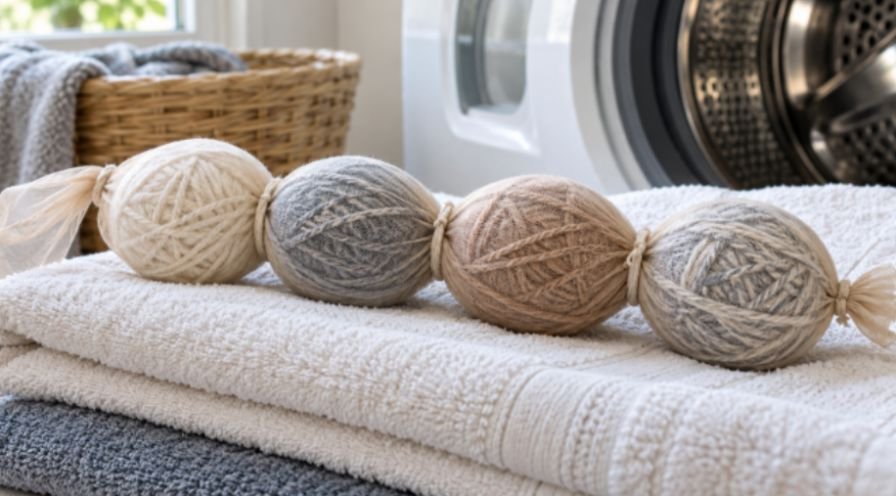
Slide your completed sphere down into the toe of an old nylon stocking. Pull the stocking fabric taut so it compresses the outer wool strands. Tie a length of cotton twine or acrylic yarn securely above the sphere using a firm double knot. Drop your next wound ball inside and knot it off again, creating a caterpillar chain of individual wool spheres.
The Agitation Phase: Forcing the Wash and Dry Bond
The caterpillar chain is ready for the wash cycle. You cannot simply soak the wool; felting demands a shock system consisting of extreme heat, hot-to-cold thermal shifts, and blunt mechanical friction.
[ Cold / Static State ]
│
▼
[ Hot Water Wash + Heavy Friction ] ──> Scales Swell & Open
│
▼
[ High-Heat Dryer Tumbling ] ──> Fibers Contract & Interlock Permanently
Water Temperature and Friction Variables
Toss the loaded stocking chain directly into your washing machine alongside a load of heavy cotton bath towels or denim jeans. The weight of these wet fabrics pummels the wool spheres during the wash cycle, accelerating the felting process.
Select your machine’s hottest wash setting and pair it with a cold rinse. The abrupt temperature drop shocks the wool cuticles, causing them to lock into place. Add a standard measure of regular laundry detergent.
According to historical fiber standards from the U.S. Department of Agriculture, raw wool processes best when mild alkaline solutions lower the natural surface tension between individual fibers.
The High-Heat Tumble Lockdown
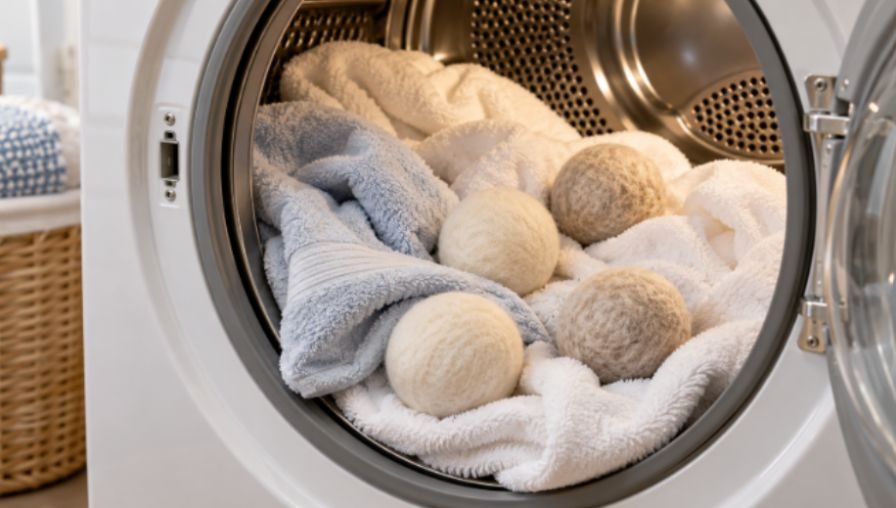
Do not remove the balls from the stocking after the wash cycle finishes. Move the entire wet load—towels and stocking chain included—straight into the clothes dryer. Set the dryer to high heat for a full sixty-minute cycle.
Once the cycle concludes, pull out the stocking and inspect the balls through the nylon mesh. Snip the twine ties and extract each sphere. Scrape your fingernail briskly across the surface. If individual strands lift freely, your core has not felted through to the center. Re-insert the balls into the stocking and repeat the hot wash and dry cycles. Firmer scrap yarns, such as Icelandic or Shetland wool, generally felt in a single pass, whereas softer merino scraps may require two complete runs.
Maximizing Laundry Efficiency and Scent Customization
A completed set of four to six felted balls works wonders for household chores. When tumbling through your laundry, they physically bounce between damp garments, preventing sheets from balling up into damp knots. This enhanced air circulation allows moisture to evaporate rapidly, reducing standard cycle times by ten to fifteen minutes per load.
Natural wool absorbs residual static electrical charges, particularly when synthetic fabrics are absent from the load. If you miss the commercial scent of retail softeners, place three drops of pure lavender, sweet orange, or cedarwood essential oil onto two of the balls. Allow the oil to absorb deep into the felt for ten minutes before starting your cycle to prevent direct oil spotting on lighter fabrics.
Frequently Asked Questions
1. Can I mix different yarn colors when making a wool dryer ball?
Yes, multi-colored wool scraps felt together seamlessly without structural issues, provided every colorway consists of 100 percent untreated, non-superwash wool.
2. How many wool dryer balls should I use per load?
Use three to four balls for standard everyday clothes loads, and increase to six balls for heavy items like bed sheets and bath towels.
3. How long do handmade wool dryer balls last?
A firmly felted ball lasts for roughly 1,000 laundry loads, which equates to three to five years of regular household use.
4. Why did my yarn ball unravel during the wash cycle?
The scrap yarn was either treated superwash wool, contained hidden synthetic fibers, or was tied too loosely inside the pantyhose during the agitation cycle.
Ditch the Dryer Sheets for Good
Transforming discarded textile odds and ends into durable home goods is one of the most rewarding ways to cut household expenses and streamline your routines. Once you construct your first batch of dense wool balls, you will never spend another dime on chemically saturated dryer sheets. Raid your craft basket, wind those neglected wool ends, and enjoy clean, chemical-free laundry.