A loaf that feels too dry for a sandwich may still be perfectly good food. That distinction matters: the U.S. Environmental Protection Agency estimates that an average family of four spends nearly $3,000 each year on food that ultimately goes uneaten.
If you’re wondering what to do with stale bread frugal hacks can turn yesterday’s loaf into breakfast, dinner, soup toppings, freezer staples, and even meal extenders. The important first step is knowing whether the bread is simply stale—or actually spoiled.
First, Know the Difference Between Stale and Unsafe
Staling is mainly a texture problem. Bread gradually becomes firmer, drier, and less pleasant to eat as-is, but that does not automatically make it unsafe.
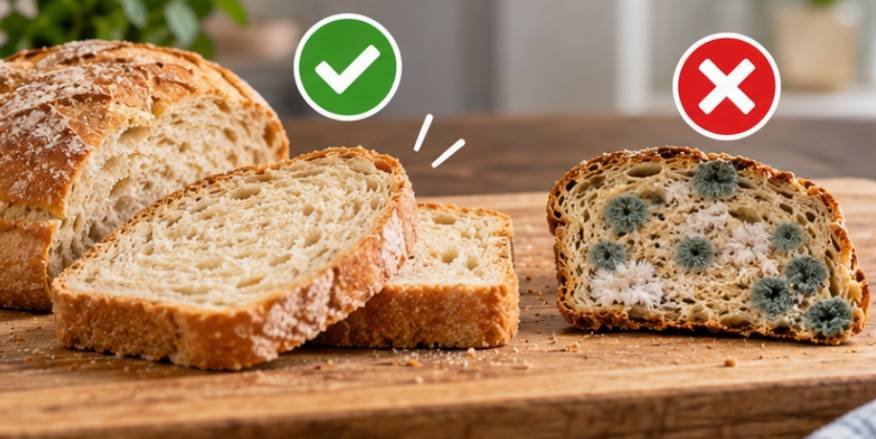
Visible mold is different.
The U.S. Food and Drug Administration advises discarding moldy food rather than assuming the visible spot is the only affected area. Bread is porous, so cutting away one fuzzy section is not a reliable way to make the rest safe.
Use this quick test before rescuing a loaf:
- Dry, hard, or chewy but normal-looking bread: usually suitable for repurposing.
- Slightly stale bread with a normal smell: use it soon or freeze it.
- Bread with visible mold, suspicious discoloration, or an unusual odor: discard it.
- Bread that has been contaminated by spoiled food: do not try to rescue it.
That simple check prevents frugality from becoming false economy.
Revive Bread Before Turning It Into Something Else
Sometimes stale bread does not need a new recipe. It simply needs moisture and heat.
Refresh a Crusty Loaf in the Oven
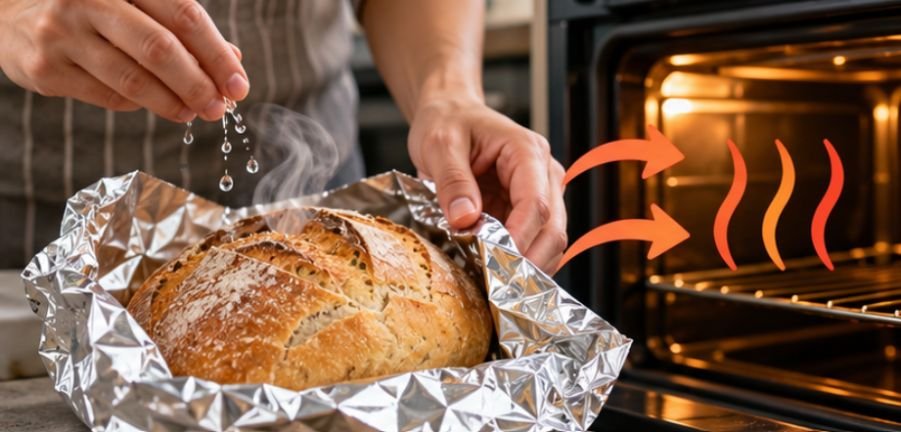
Lightly wet the outside of a whole loaf or thick piece of bread. You do not want to soak it—just introduce enough moisture to create steam.
Wrap it loosely in foil and warm it at about 350°F for several minutes. Removing the foil toward the end can help restore a crisper crust.
This technique works particularly well for French bread, Italian loaves, baguettes, and sturdy artisan bread.
Eat refreshed bread fairly soon. Reheating improves texture temporarily; it does not reset the bread’s shelf life.
Rescue One Slice Quickly
For a single slice, wrap it loosely in a barely damp paper towel and microwave it for roughly 10 seconds. Use short bursts. Too much microwave time can make bread rubbery once it cools.
Turn Dry Bread Into Ingredients You Would Otherwise Buy
One of the smartest frugal strategies is to stop viewing stale bread as leftovers and start treating it as a pantry ingredient.
Make Breadcrumbs
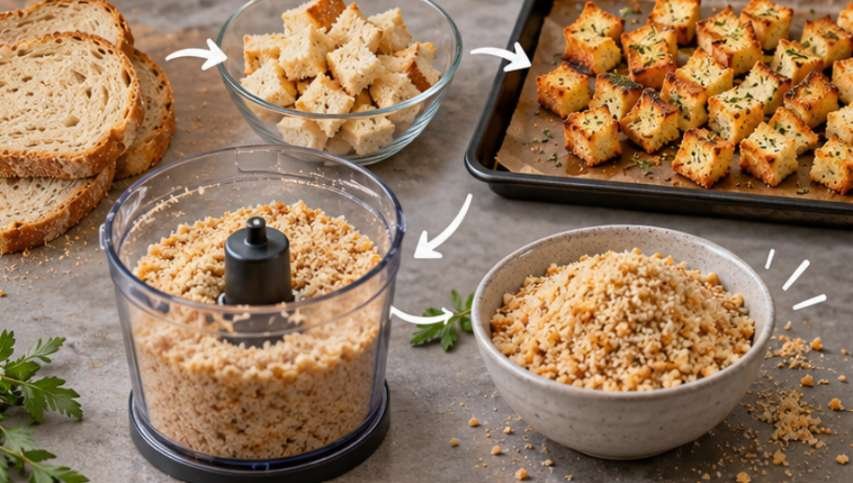
Dry bread is practically halfway to becoming breadcrumbs already. Toast slices or cubes until thoroughly dry, cool them, and pulse them in a food processor. Leave them coarse for crunchy casserole toppings or process them more finely for meatballs, meatloaf, breaded chicken, or vegetable patties.
Utah State University Extension specifically recommends drying surplus bread for breadcrumbs and other recipes. Freeze extra crumbs in a tightly sealed freezer bag and scoop out what you need.
Make Croutons
Cut stale bread into bite-sized cubes, toss lightly with oil, garlic, dried herbs, salt, or Parmesan, then bake until crisp.
Homemade croutons can replace another grocery-store purchase while helping stretch salads and soups into more satisfying meals.
An air fryer can also help turn affordable ingredients into quick, satisfying meals, and these cheap air fryer recipes for families offer more budget-friendly ideas for making everyday cooking easier while reducing food waste.
They are also a good destination for bread heels—the pieces many households are most likely to ignore.
Let Stale Bread Become the Main Meal
The best what to do with stale bread frugal hacks do more than salvage a loaf. They use inexpensive bread to stretch more expensive ingredients.
Build a Bread Pizza
Use thick bread slices, English muffins, rolls, or split buns as pizza bases. Spread with tomato sauce, add shredded cheese, and use small amounts of refrigerator leftovers such as peppers, mushrooms, cooked sausage, chicken, spinach, or olives. Bake until the edges crisp and the cheese melts.
This works especially well near grocery day, when several ingredients remain but none seems sufficient for a full meal.
Make a Tomato-and-Bread Salad
Panzanella turns dry bread into an advantage. Toss toasted or stale bread cubes with ripe tomatoes, cucumber, onion, olive oil, vinegar, pepper, and herbs. The bread absorbs the tomato juices and dressing instead of collapsing immediately.
Beans, leftover chicken, mozzarella, or chickpeas can turn the salad into a more substantial lunch.
Thicken Soup With Bread
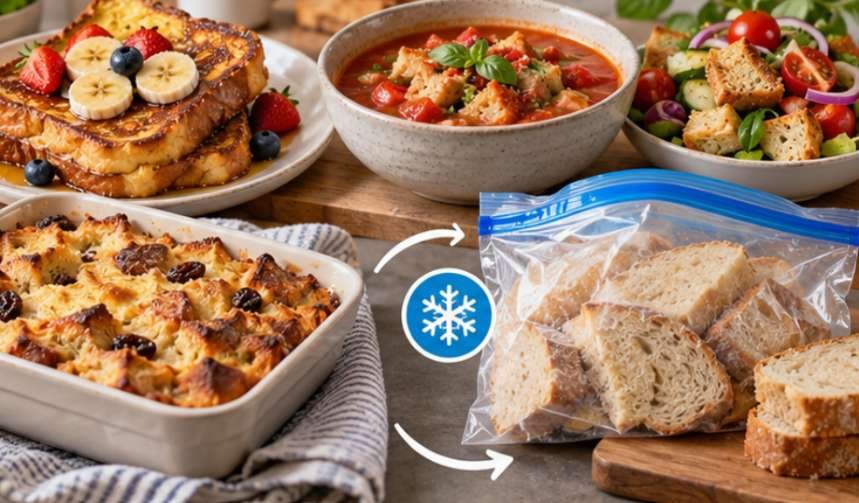
Bread has historically been used to add body to soups because starch absorbs liquid and creates a richer texture.
Add torn pieces to tomato soup, vegetable soup, or bean-based dishes and simmer until the bread begins breaking down.
Italian dishes such as pappa al pomodoro and ribollita use this idea particularly well: inexpensive bread transforms simple vegetables and broth into something far more filling. Stale bread can also be soaked and blended into gazpacho for a smoother texture.
For more ways to turn affordable pantry staples into filling meals, try these cheap meals using canned beans and rice for budget-friendly combinations that help stretch ingredients and reduce food waste.
Stale Bread Is Often Better for Breakfast
Fresh bread can sometimes be too soft for custard-heavy dishes. Slightly dry bread is more absorbent, making it ideal for French toast. It takes in the egg-and-milk mixture while retaining enough structure to avoid turning instantly soggy.
The same principle works for an overnight breakfast casserole. Layer bread cubes with eggs, milk, cheese, vegetables, or cooked breakfast meat, refrigerate overnight, then bake the next morning.
Sweet bread pudding uses essentially the same strategy with sugar, cinnamon, vanilla, fruit, raisins, or other inexpensive additions. Savory versions can use leftover cheese, spinach, roasted vegetables, or herbs instead.
Use the Freezer Before Bread Becomes Stale
The cheapest stale-bread solution is often preventing the problem in the first place.
Utah State University Extension advises keeping bread tightly closed at room temperature for normal use and freezing properly wrapped bread for longer storage rather than refrigerating it, which can accelerate staling.
Colorado State University Extension lists frozen baked bread among foods that retain good quality for roughly two to three months under recommended freezer conditions.
Slice the loaf before freezing so you can remove only what you need. Separate slices if necessary, press excess air from the freezer bag, label it, and freeze.
University of Minnesota Extension also notes that breads and similar baked goods can generally be safely refrozen, although repeated thawing and freezing may reduce quality.
Why Such a Small Habit Matters
Bread may be inexpensive compared with meat or fresh produce, but waste adds up across an entire grocery cart.
EPA says roughly one-third of food in the United States goes uneaten, and preventing wasted food at home is the most environmentally preferred management strategy. Reusing edible food also saves the land, energy, water, transportation, and labor that went into producing it.
When grocery money is tight, knowing how to make the most of available ingredients becomes even more important. These ideas for what to cook when you have no money for groceries offer practical ways to prepare filling meals while reducing food waste and avoiding unnecessary grocery expenses.
That makes stale-bread cooking less about squeezing pennies from one loaf and more about building a kitchen where usable food rarely gets discarded automatically.
Frequently Asked Questions
1. Can you eat stale bread?
Usually, yes, if it is simply dry or firm and shows no signs of spoilage. Bread with visible mold, unusual discoloration, or a suspicious smell should be discarded.
2. What is the easiest use for very hard stale bread?
Breadcrumbs and croutons are ideal because dryness helps. Toast the bread completely, then cube it for croutons or process it into crumbs.
3. Can I freeze bread before it becomes stale?
Yes. Slice and tightly wrap bread before freezing so individual portions can be removed as needed. Freezing is generally better for long-term texture than repeatedly refrigerating bread.
4. What to do with stale bread frugal hacks when I have an entire loaf?
Divide it by purpose: freeze some slices, make breadcrumbs from the driest pieces, and use the remainder for French toast, bread pudding, pizza toast, strata, or soup.
Make the Last Slice Earn Its Place
A hard loaf does not have to signal the end of its useful life. In many recipes, dryness is precisely what makes old bread valuable: it absorbs custard better, turns crisp in the oven, thickens soup, and becomes breadcrumbs with almost no effort.
The bigger savings come from changing the habit behind the food. Check bread before buying another loaf, freeze what your household will not finish, and keep one or two dependable leftover-bread recipes in rotation. A few slices may seem insignificant, but a kitchen that repeatedly turns “old” ingredients into tomorrow’s meal wastes less money with almost no extra work.