A can of beans and a cup of rice can solve more dinner problems than their humble price tags suggest. Together, they create a filling foundation that can move from Cajun-inspired bowls to burritos, skillet dinners, soups, and completely different leftovers with just a few seasonings.
That flexibility is what makes cheap meals using canned beans and rice so useful when grocery prices are tight. Beans supply plant protein and fiber, while rice provides an inexpensive base that absorbs almost any flavor you add.
USDA’s MyPlate recognizes beans, peas, and lentils as protein foods as well as vegetables, making them unusually useful pantry staples. The trick isn’t eating the same bowl of plain beans and rice five nights in a row. It’s learning one flexible formula and changing the flavor.
Why Beans and Rice Work So Well on a Food Budget
Canned beans cost more per serving than dried beans, but they remove soaking and long cooking times. For someone trying to get dinner on the table after work, that convenience can prevent a much more expensive takeout order.
Beans also bring more than calories to the plate. Penn State Extension notes that beans provide protein and fiber at relatively low cost and recommends canned or frozen beans when convenience matters.
Rice stretches those beans into multiple servings. Long-grain white rice is inexpensive and cooks quickly, while brown rice provides a whole-grain alternative if you prefer it. Harvard’s Healthy Eating Plate recommends beans as a healthy protein source and suggests choosing whole grains such as brown rice more often than refined grains.
For a more balanced dinner, add whatever inexpensive vegetable is available: frozen corn, cabbage, carrots, peppers, tomatoes, spinach, or mixed vegetables all work.
The $5 Bean-and-Rice Dinner Formula
You don’t really need a recipe once you understand the basic structure.
Start with:
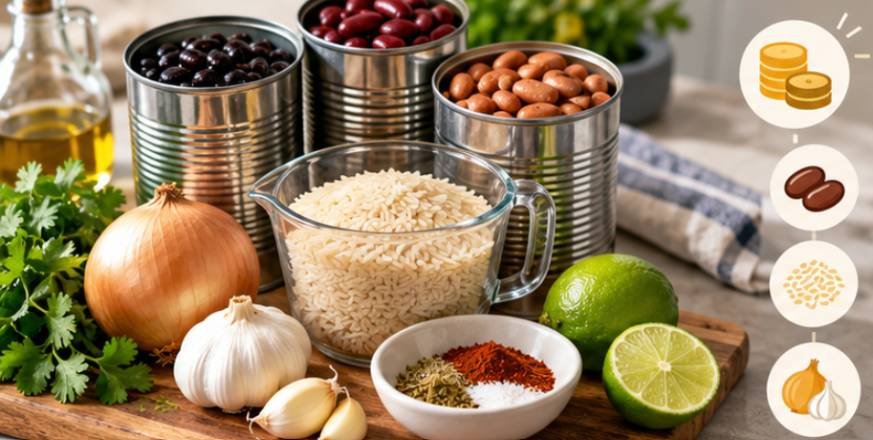
- 1 cup dry rice
- 1 or 2 cans of beans
- 1 inexpensive vegetable or frozen vegetable mixture
- 1 flavor base
- 1 acidic or spicy finishing ingredient
Your flavor base might be onion and garlic, tomato paste, salsa, curry powder, Cajun seasoning, taco seasoning, cumin, or Italian herbs.
Your finishing ingredient might be lime juice, vinegar, hot sauce, cilantro, green onions, or a spoonful of salsa.
That simple framework creates several distinctly different meals without requiring a pantry full of specialty ingredients.
If cutting fresh onions and peppers makes weeknight cooking feel like a chore, these fast chopping hacks for vegetables can shorten prep time.
5 Cheap Meals Using Canned Beans and Rice
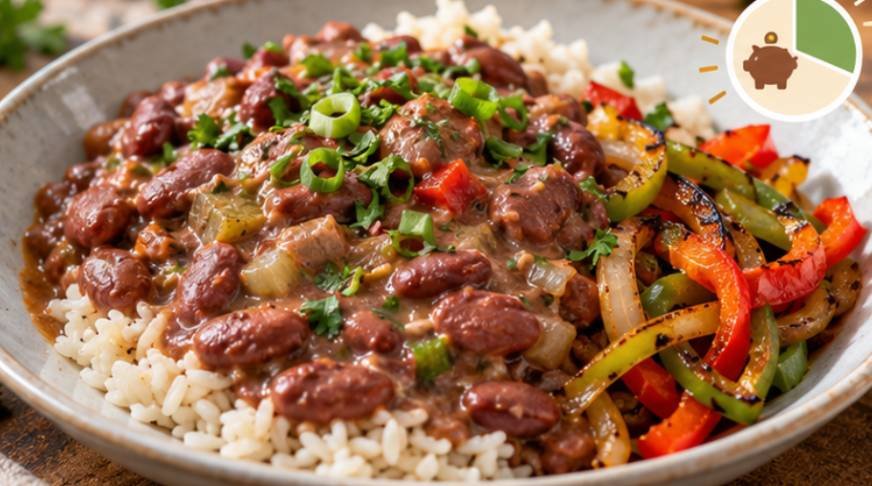
1. Creamy Red Beans Over Rice
Start cooking long-grain white rice while you sauté chopped onion, celery, and bell pepper in a little oil.
Add kidney beans, garlic, smoked paprika, oregano, thyme, and cayenne. Instead of adding cream, mash roughly one-third of the beans directly in the pot. Their starch thickens the liquid and creates a surprisingly rich texture.
Add water or broth until you reach a gravy-like consistency and simmer for about 15 minutes.
Serve it over rice with hot sauce.
If the budget allows, a small amount of smoked sausage can add flavor without turning meat into the main ingredient.
2. Twenty-Minute Black Bean Lime Bowls
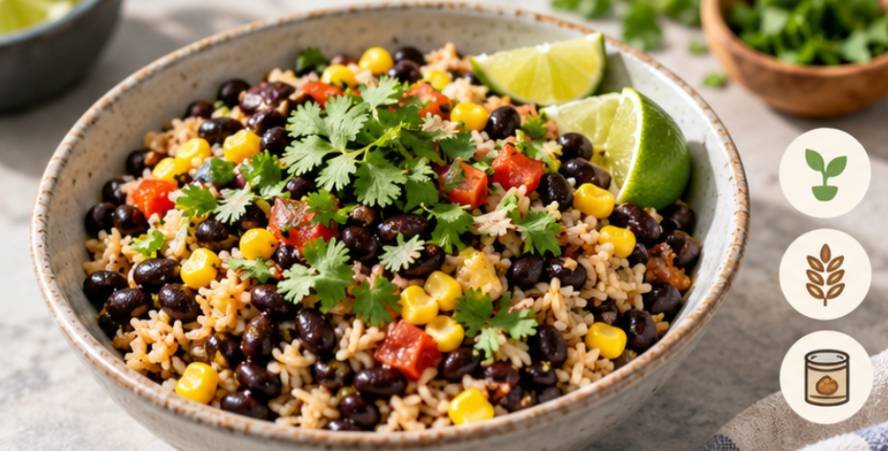
Black beans may be the easiest starting point for weeknight rice bowls.
Sauté an onion, then add drained black beans, cumin, garlic powder, and a splash of water. Mash several spoonfuls of beans against the side of the skillet and stir them back in.
Spoon the mixture over rice and finish with lime juice.
From there, use whatever is available: frozen corn, shredded cabbage, salsa, avocado, cheese, cilantro, or a fried egg.
This is also an excellent leftover lunch because the toppings can change while the basic mixture stays the same.
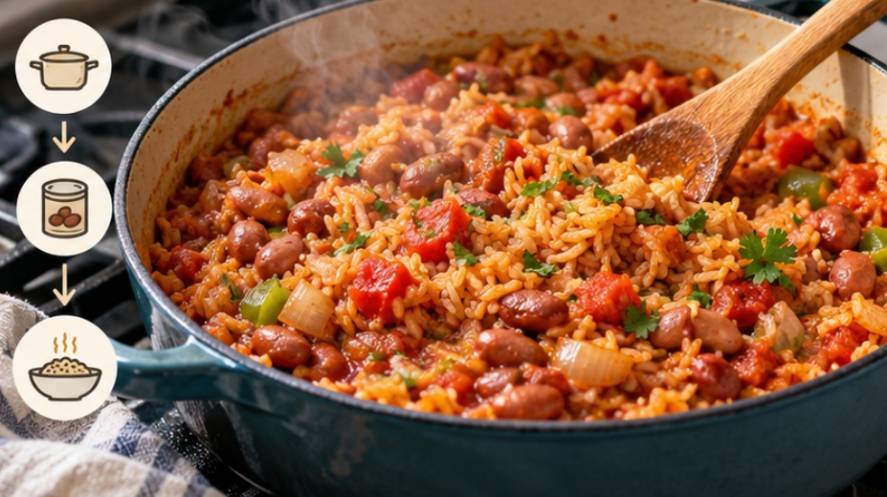
3. One-Pot Pinto Beans and Tomato Rice
For fewer dishes, cook everything in one deep skillet.
Sauté onion and garlic before stirring in a spoonful of tomato paste, chili powder, oregano, and uncooked long-grain rice.
Add pinto beans and the correct amount of broth or water for your rice. Bring everything to a gentle boil, cover tightly, reduce the heat, and cook until the rice is tender.
Let the pot rest covered for about five minutes before fluffing.
Finish with lime juice or hot sauce.
4. Salsa Rice and Bean Skillet
This version is almost embarrassingly easy.
Combine cooked rice, black or pinto beans, salsa, frozen corn, cumin, and a little shredded cheese in a skillet.
Heat until everything is hot and the cheese melts.
Serve it as a bowl, wrap it in tortillas, or spoon it over baked potatoes the following night.
That ability to reuse one filling in several formats is one of the easiest ways to reduce food waste.
5. Bean-and-Rice Fried Rice
Leftover rice doesn’t have to become another Southwestern-style bowl.
Heat a small amount of oil in a skillet. Add cold cooked rice, beans, frozen mixed vegetables, garlic, and an egg if you have one.
Season lightly with soy sauce or another savory sauce.
The texture works best with refrigerated rice because the grains have had time to firm up.
It’s a useful reminder that inexpensive ingredients don’t need to stay trapped in one cuisine.
Make Canned Beans Healthier Without Making Dinner Harder
The main issue with canned beans is often sodium rather than the beans themselves. The FDA recommends less than 2,300 milligrams of sodium per day for most adults and specifically suggests rinsing sodium-containing canned foods such as beans before eating them.
Utah State University Extension reports that draining and rinsing canned beans can substantially reduce their sodium content.
That makes the routine simple: drain, rinse, and then build flavor yourself with spices, citrus, garlic, herbs, vinegar, or hot sauce.
Check labels too. “No salt added” or lower-sodium beans can make sense when they cost roughly the same as regular versions.
The Flavor Rule That Prevents Boring Budget Meals
Most disappointing bean-and-rice dinners aren’t missing expensive ingredients. They’re missing contrast.
Try combining four elements:
Savory: garlic, onion, broth, tomato paste, soy sauce.
Warm spice: cumin, paprika, chili powder, curry powder, oregano.
Acid: lime, lemon, vinegar, salsa, pickled jalapeños.
Texture: cabbage, toasted breadcrumbs, tortilla chips, pumpkin seeds, corn.
You don’t need all four in large amounts. Even a squeeze of lime can make a plain pot taste dramatically different.
The American Heart Association also recommends replacing some meat-based meals with beans, using frozen vegetables, planning meals ahead, and cooking enough for leftovers as practical budget strategies.
Turn One Batch Into Three Different Meals
Meal repetition becomes much easier to tolerate when leftovers change form.
On Monday, serve seasoned beans over rice.
On Tuesday, combine the leftovers with salsa and cheese inside tortillas.
On Wednesday, turn the remaining mixture into soup by adding canned tomatoes, broth, frozen vegetables, and spices.
The ingredients barely change, but the eating experience does.
To make this approach work across an entire week, try this budget meal prep for one person for $25 a week plan for practical ways to organize inexpensive ingredients, prepare meals in batches, and reduce food waste.
This same approach works throughout your grocery budget.
Planning overlapping ingredients is one of the most practical strategies in this guide to how to save money on groceries.
Don’t Forget Food Safety
Large batches only save money if the leftovers remain safe. USDA guidance says cooked leftovers should be refrigerated within two hours, stored at 40°F or below, and generally eaten within three to four days. Freezing portions is better when you know you won’t finish them that quickly.
Shallow containers help food cool more quickly. Labeling containers with the cooking date also eliminates the familiar refrigerator question: “How old is this?”
Frequently Asked Questions
1. Are canned beans cheaper than meat?
Usually, yes. Beans are widely recognized as an economical plant-based protein source, although exact savings vary by grocery store, brand, location, and meat prices.
2. What beans taste best with rice?
Black, pinto, kidney, red, cannellini, and chickpeas all work. Match the bean to your seasoning rather than worrying about finding one “correct” variety.
3. Are cheap meals using canned beans and rice nutritionally balanced?
They provide carbohydrates, plant protein, and fiber. Adding vegetables, fruit, and healthy fats creates a more varied meal.
4. Should canned beans always be rinsed?
Rinsing is useful when you want less sodium. However, bean liquid can sometimes help thicken soups or sauces, particularly with lower-sodium products.
Final Thoughts
Beans and rice prove that stretching a grocery budget doesn’t have to mean surviving on bland food. A few inexpensive seasonings can turn essentially the same pantry staples into Cajun-inspired red beans, lime-scented black bean bowls, tomato rice, burrito fillings, fried rice, or soup.
The bigger lesson behind cheap meals using canned beans and rice is to shop for flexible ingredients instead of isolated recipes. Keep rice, a few cans of beans, frozen vegetables, onions, and several strong seasonings available, and you already have the foundation for days of dinners. Budget cooking gets much easier when one inexpensive purchase can become several genuinely different meals.