

In recent years, private credit has emerged as a significant component of the financial landscape. As traditional lending channels face increasing regulatory constraints and competitive pressures, private credit offers an alternative avenue for borrowers and investors alike. Exploring the fundamentals, mechanisms, and advantages of private credit reveals why it continues to gain traction within both institutional and individual financial strategies.
Defining Private Credit
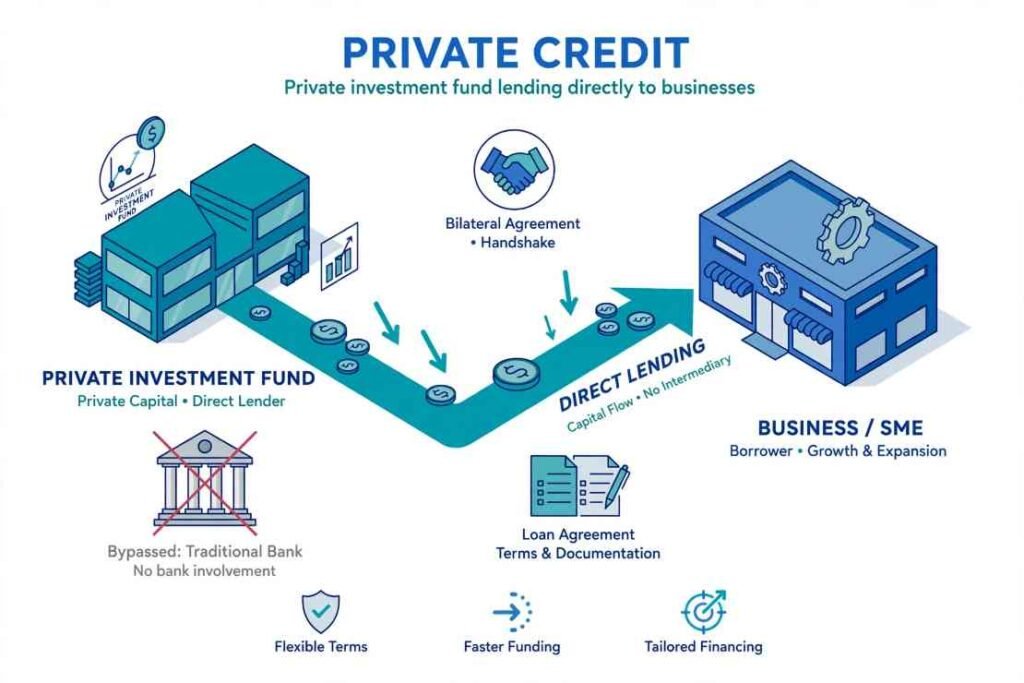
Private credit refers to non-bank lending where funds are provided directly to borrowers by private market lenders, such as funds, institutional investors, or high-net-worth individuals, rather than through conventional banks or public markets. This financing approach typically involves loans that are not publicly traded and can encompass a wide range of debt instruments.
Key Characteristics of Private Credit
Unlike traditional bank loans or bonds, private credit often features customised structures designed to meet the specific needs of borrowers. These loans can range from senior secured debt to mezzanine financing, each with distinct risk and return profiles. The direct nature of private credit lending enables flexible terms, quicker execution, and bespoke covenants tailored to the borrower’s circumstances.
Market Drivers Behind the Rise of Private Credit

The expansion of private credit is influenced by several market trends. Regulatory tightening post-financial crisis has constrained traditional banks’ lending capacities, creating a funding gap that private lenders are well-positioned to fill. Simultaneously, investors seeking higher yields amid historically low interest rates find private credit an attractive option to enhance portfolio returns.
Diversification for Investors
Private credit offers investors access to a diversified asset class less correlated with public equities and fixed income markets. This diversification can reduce overall portfolio risk while providing stable income streams. Additionally, the illiquid nature of private credit investments generally attracts longer-term capital seeking consistent returns.
Types of Private Credit Instruments
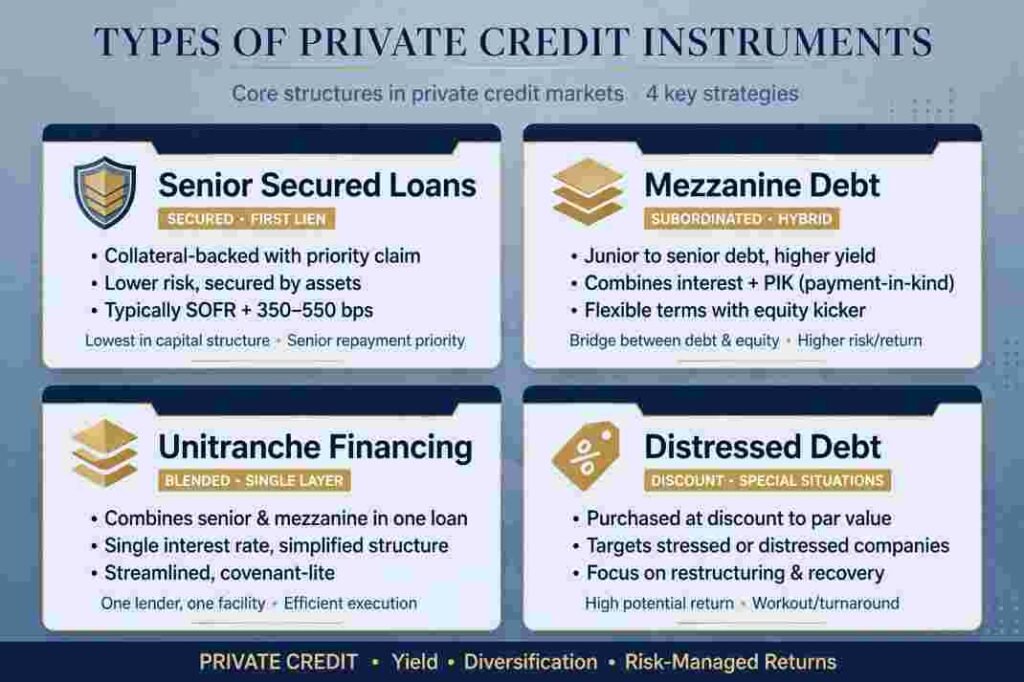
Private credit encompasses various forms of debt instruments, including but not limited to:
- Senior secured loans: Loans backed by collateral, usually with the highest claim on a borrower’s assets in case of default.
- Mezzanine debt: Subordinated financing typically offering higher yields due to increased risk.
- Unitranche financing: A blend of senior and subordinated debt, simplifying capital structure with a single loan.
- Distressed debt: Debt of companies experiencing financial difficulties, purchased at a discount.
Selection Based on Risk and Return
Each private credit instrument presents different risk and return trade-offs. Senior loans generally prioritise capital preservation and income stability, whereas mezzanine and unitranche financing offer potential for greater returns at increased risk and maximise your loan potential. Investors and borrowers select instruments aligned with their financial objectives and risk appetite.
Private Credit Versus Traditional Lending
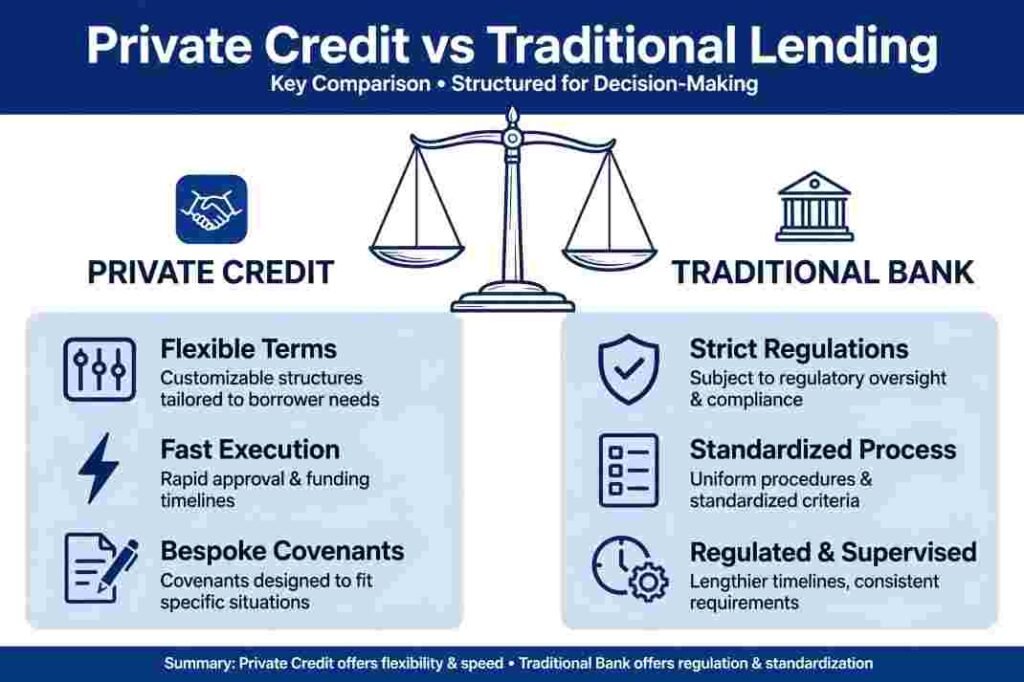
In comparison to bank loans or publicly traded bonds, private credit distinguishes itself through greater flexibility, tailored underwriting, and often faster decision-making processes. Banks typically adhere to strict regulatory frameworks and standardised lending criteria, which can limit their ability to serve niche markets or unconventional borrowers.
Advantages for Borrowers
Borrowers benefit from enhanced access to capital and customised terms. Private credit can accommodate diverse financing needs, such as leveraged buyouts, acquisitions, growth capital, or refinancing. The ability to negotiate loan covenants and structures often results in more favourable conditions versus traditional financing routes.
Investor Appeal in Private Credit
For investors, private credit provides an opportunity for attractive risk-adjusted returns. Investment funds devoted to private debt actively manage portfolios to mitigate risks, such as creditworthiness assessments and ongoing monitoring. This active management contributes to the resilience and yield stability of the asset class.
Financial Benefits of Investing in Private Credit
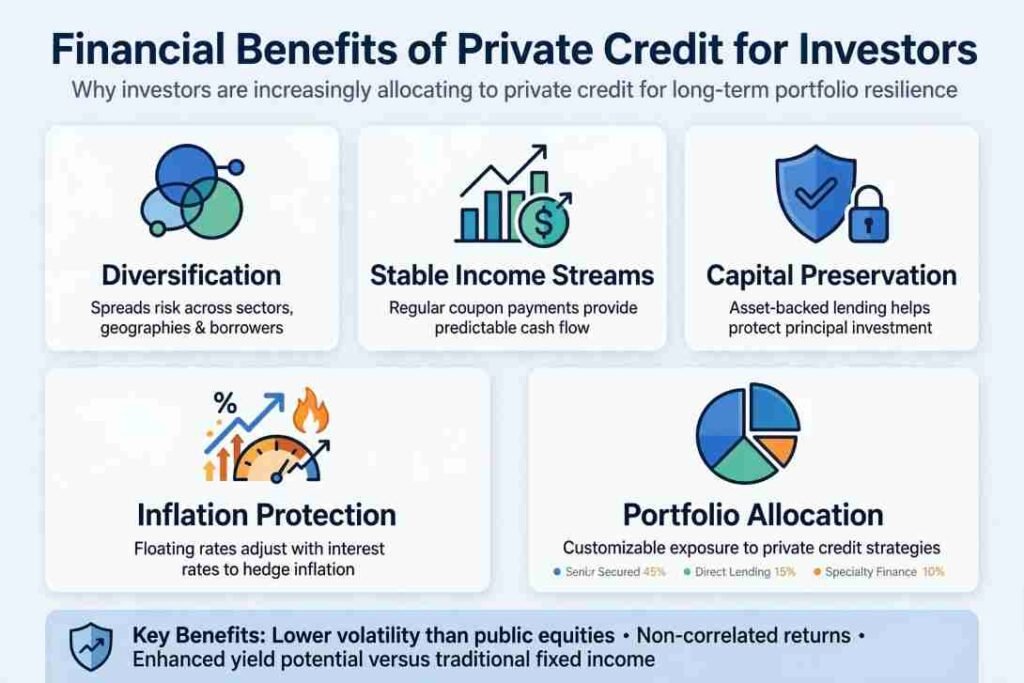
Private credit investments deliver several financial advantages. Principal among these is income generation through regular interest payments. The typically higher yields associated with private credit compared to conventional fixed income instruments appeal to investors seeking enhanced income streams.
Capital Preservation and Risk Management
Due to the secured nature of many private credit loans, capital preservation is a prominent feature and it also simplify business asset acquisition. Senior secured loans, for instance, reduce downside risk by prioritising repayment in default scenarios. Coupled with covenants and monitoring, these features strengthen investor protection.
Inflation Protection
Certain private credit structures incorporate floating interest rates that adjust with benchmark rates. This mechanism allows investors to benefit from rising interest rates and inflationary environments, preserving real returns.
Challenges and Considerations in Private Credit
Despite its benefits, private credit entails specific challenges. Limited liquidity is a notable consideration as investments are generally locked in for fixed durations. The bespoke and opaque nature of private credit can also present valuation difficulties.
Due Diligence Requirements
Investors must conduct thorough due diligence to evaluate borrower creditworthiness, loan terms, and regulatory factors. This process often requires specialised expertise and resources not typically needed in public markets.
Regulatory and Market Risks
Private credit is subject to legal and regulatory frameworks that vary by jurisdiction. Changes in these frameworks could impact loan enforceability or investor protections. Market disruptions could also affect borrower capabilities to meet debt obligations.
Conclusion
Private credit represents a vital and growing segment of the financial ecosystem, providing alternative financing solutions for borrowers and attractive investment opportunities for lenders. Its flexibility, potential for higher yields, and diversification benefits position private credit as a noteworthy consideration within modern financial portfolios.
Understanding the nuances of private credit and its financial benefits assists investors and borrowers in making informed decisions tailored to their strategic objectives. As this market continues to mature, private credit’s role in supporting economic growth and delivering value remains increasingly significant.